





# What Is Hot Rolled Coil? The Ultimate Guide to Properties, Process, and Applications
If you work in manufacturing, construction, or metal fabrication, you have likely encountered the term hot rolled coil. But what exactly is it, and why is it such a fundamental material in modern industry? This comprehensive guide will answer that question in depth, explaining the process, properties, and critical applications of this essential steel product.
In simple terms, a hot rolled coil is a long, continuous strip of steel that has been formed by rolling heated slabs at extremely high temperatures. This process defines its characteristics and makes it a cost-effective and versatile workhorse material. Understanding its nuances is key to selecting the right material for your project.
## The Hot Rolling Process Explained Step by Step
The journey from raw steel to a finished coil is fascinating. Here is a detailed, step-by-step breakdown of how hot rolled coil is made.
STEP 1: REHEATING. The process begins with large, solid slabs of steel. These slabs are fed into a reheating furnace, where they are heated to a temperature above 1700 degrees Fahrenheit. This is typically above the steel’s recrystallization temperature, making the metal malleable for shaping.
STEP 2: ROUGHING. The glowing hot slab is then passed through a series of roughing mills. These powerful rollers apply tremendous pressure, gradually reducing the slab’s thickness and increasing its length to form a transfer bar.
STEP 3: FINISHING. The transfer bar moves into the finishing mill, a series of tandem rolling stands. Here, it is precisely rolled down to its final, specified thickness, which can range from about 1.5 mm to over 25 mm.
STEP 4: COOLING. After exiting the last stand, the now-thin, long strip of steel runs along a cooling table. Controlled cooling with water sprays sets the final metallurgical properties of the steel.
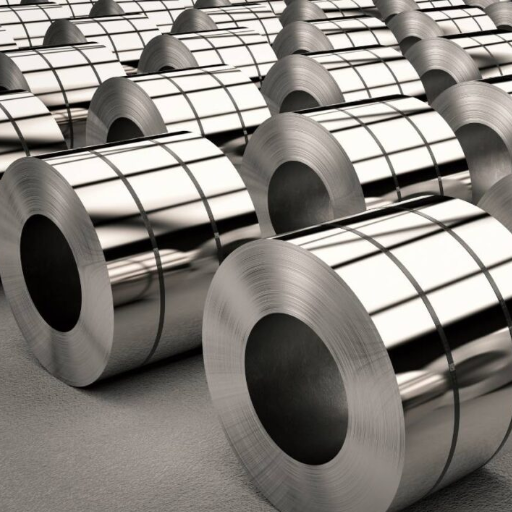
STEP 5: COILING. The cooled strip is fed into a high-speed coiler, which winds it into a tight, heavy coil. A single coil can weigh over 40 tons. The coil is then strapped, labeled, and prepared for shipment to customers or for further processing.
This efficient, continuous process is why hot rolled coil is widely available and economical. According to the World Steel Association, over 50% of all steel produced globally undergoes some form of hot rolling, highlighting its dominance (来源: World Steel Association).
## Key Properties and Characteristics of Hot Rolled Coil
The hot rolling process imparts a specific set of physical and visual traits to the steel. Recognizing these properties helps in material selection.
First, the surface of hot rolled steel has a characteristic scaled finish. A dark blue-grey oxide layer, known as mill scale, forms during cooling. This gives it a rough, non-reflective appearance. For applications where surface finish is critical, this scale is often removed via pickling.
Mechanically, hot rolled coils have slightly lower strength and hardness compared to cold rolled steel but offer superior ductility. This means they can be bent and formed more easily without cracking. They also typically have less internal stress because the cooling process is more gradual.
Dimensional tolerances are looser than in cold rolling. Thickness and width can vary slightly along the length of the coil. However, for many structural applications, these tolerances are perfectly acceptable and contribute to the lower cost.
## Hot Rolled Coil vs. Cold Rolled Coil: A Detailed Comparison
Choosing between hot rolled and cold rolled steel is a common dilemma. The decision hinges on your project’s requirements for finish, precision, strength, and budget. The following table breaks down the key differences.
| Feature | Hot Rolled Coil | Cold Rolled Coil |
|---|---|---|
| PROCESS | Rolled at high temperatures (above recrystallization). | Rolled at room temperature from hot rolled pickled coil. |
| SURFACE FINISH | Rough, scaled, grey-blue. May have slight imperfections. | Smooth, shiny, and precise with an oily feel. |
| MECHANICAL PROPERTIES | More ductile, easier to form. Lower yield strength. | Higher yield strength and hardness. Less ductile. |
| DIMENSIONAL TOLERANCES | Less precise, with wider tolerances. | Tight, precise tolerances for thickness and flatness. |
| COST | Generally lower due to simpler, faster production. | Generally higher due to additional processing steps. |
| TYPICAL APPLICATIONS | Structural beams, railroad tracks, truck frames, agricultural equipment. | Automotive panels, appliances, furniture, metal containers. |
## Primary Applications and Uses in Industry
Hot rolled coil is the backbone of heavy industry. Its applications are vast, but they generally fall into two categories: direct use and as feedstock for further processing.
A major direct use is in structural shapes. Hot rolled coils are slit and then formed into I-beams, channels, and angles used in building frames, bridges, and warehouses. The construction sector is a massive consumer. The automotive industry uses it for parts where surface finish is not critical, such as wheel rims, chassis components, and internal structural members.
Furthermore, hot rolled coil serves as the raw material for other processes. It is the starting point for making cold rolled coil. After being pickled to remove scale, it is cold-rolled to achieve a superior finish. It is also used to manufacture welded steel pipe and tube.
In our team’s experience consulting with fabricators, we often see hot rolled coil specified for large-scale agricultural machinery, mining equipment, and shipping containers. Its combination of strength, formability, and cost is unmatched for these demanding environments.
## Common Misconceptions and What to Watch Out For
When sourcing and working with hot rolled coil, several pitfalls can impact your project. Being aware of these common mistakes will save time and money.
A frequent misconception is that hot rolled steel is always inferior in quality to cold rolled. This is not true. It is simply different, optimized for different jobs. Using cold rolled for a structural beam would be unnecessarily expensive, while using hot rolled for a visible appliance panel would yield a poor finish.
Another critical point is accounting for mill scale. If your fabrication process involves welding or painting, the scale must be removed. Welding through scale can create porosity and weak joints, while paint will not adhere properly. Processes like shot blasting or pickling are essential pre-treatment steps.
Also, be mindful of dimensional changes during cooling. The hot rolling process can lead to slight warping or uneven edges. For projects requiring laser-cut precision, it is crucial to discuss flatness and edge condition requirements with your supplier beforehand. Do not assume every coil is perfectly flat.
## Your Practical Checklist for Specifying Hot Rolled Coil
Before you place your next order, use this actionable checklist to ensure you get the right material for your needs.
1. Define the final application and required mechanical properties, such as yield strength and elongation.
2. Determine if the mill scale surface is acceptable or if pickled/oiled coil is necessary.
3. Specify the exact grade of steel required, such as ASTM A36, A1011, or a specific high-strength low-alloy grade.
4. Confirm the required thickness, width, and coil weight, understanding the standard tolerances for hot rolled products.
5. Inquire about the coil’s internal and external diameter to ensure compatibility with your uncoiling equipment.
6. Discuss testing and certification needs with your supplier, like mill test reports to verify chemistry and properties.
7. Plan for proper storage to prevent excessive rusting if the coil will not be used immediately.
By following this guide, you now have a thorough understanding of what a hot rolled coil is. From its fiery birth in the mill to its role in building our world, this material exemplifies industrial efficiency and versatility. Making an informed choice between hot rolled and other steel forms empowers you to optimize both performance and cost in your projects.