





# The Ultimate Guide to VAT Tax in Norway: Rates, Registration, and Compliance for 2024
Understanding VAT tax in Norway is crucial for any business operating in or selling to the Norwegian market. Known locally as “merverdiavgift” or MVA, this value-added tax is a significant source of revenue for the Norwegian government. Whether you are a local entrepreneur, a foreign e-commerce seller, or a freelancer, navigating the Norwegian VAT system can seem complex. This comprehensive guide breaks down everything you need to know, from standard rates to registration thresholds and filing procedures. Our goal is to provide you with clear, actionable information to ensure your business remains compliant and efficient.
## What is VAT (MVA) in Norway?
VAT, or Value Added Tax, is a consumption tax applied to most goods and services sold within Norway. It is levied at each stage of the supply chain, from production to the final sale to the consumer. The end consumer ultimately bears the cost, while businesses act as tax collectors for the state. The Norwegian Tax Administration (Skatteetaten) oversees all matters related to VAT tax in Norway. The system is designed to be neutral for businesses, as they can generally reclaim the VAT they pay on their own purchases and expenses, known as input tax. This fundamental principle prevents the tax from becoming a business cost and ensures it is only a burden on the final consumption.
## Current Norwegian VAT Rates and Categories
Norway employs a multi-rate VAT system. The rates are set by the government and apply to different categories of goods and services. It is vital to classify your products or services correctly to apply the right rate. Applying an incorrect rate can lead to penalties and back payments. The main rates for VAT in Norway as of 2024 are as follows:
STANDARD RATE: 25%
This is the default and most common rate. It applies to most goods and services, including electronics, clothing, professional services, and restaurant meals.
REDUCED RATE: 15%
This rate applies primarily to food and drink items. However, note that meals served in restaurants or ready-to-eat food are taxed at the standard 25% rate.
LOW RATE: 12%
This rate is specific to certain services within the passenger transport sector, hotel accommodations, and broadcasting services.
ZERO RATE (0%):
A zero rate applies to a limited number of supplies, such as the sale of ships and aircraft for use in international traffic, and certain newspaper and magazine subscriptions. Exports of goods to countries outside Norway are also zero-rated, which is a key mechanism for international businesses.
To clarify the application of these rates, here is a comparison table detailing common scenarios:
| Product or Service Category | Applicable VAT Rate in Norway | Key Notes and Examples |
|---|---|---|
| General Goods & Services | 25% | Default rate. E.g., furniture, consulting, software downloads (if not exempt). |
| Food & Beverages (for home preparation) | 15% | Groceries from a supermarket. Restaurant meals are taxed at 25%. |
| Passenger Transport & Lodging | 12% | Bus/train tickets, hotel stays, and campground fees. |
| International Services & Exports | 0% | Services to foreign clients, export of physical goods outside Norway. |
| Financial and Insurance Services | Exempt | No VAT charged, but related input VAT typically cannot be reclaimed. |
## Who Needs to Register for Norwegian VAT?
Registration for VAT tax in Norway is mandatory once your business exceeds a specific annual turnover threshold. The current registration threshold is NOK 50,000 in taxable sales over a 12-month period. This threshold applies to both domestic businesses and foreign companies selling directly to Norwegian consumers (B2C). If you are a foreign business selling goods from abroad to Norwegian customers, you may need to register under the VOEC scheme for distance sales under NOK 3,000 or for general VAT if you exceed the threshold. Interestingly, voluntary registration is possible even below the threshold, which can be beneficial if your business has high input VAT on startup costs that you wish to reclaim.
From our team’s experience advising international e-commerce clients, the most common pitfall is underestimating the Norwegian VAT obligations. Many assume that selling online from another country exempts them, but Norwegian tax authorities are increasingly enforcing rules on digital services and low-value goods.
## Step-by-Step Guide to VAT Registration in Norway
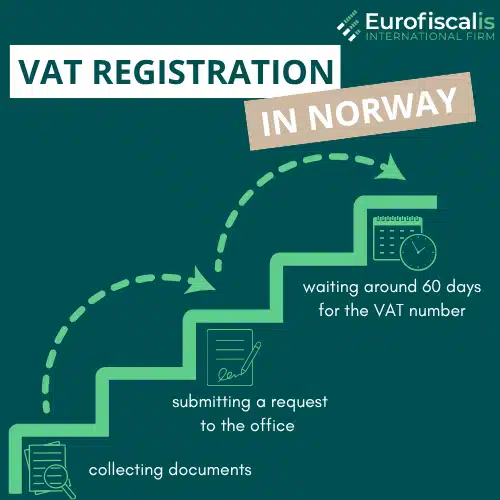
Registering for VAT can be done online through the Altinn portal, the official platform for dialogue between businesses and the Norwegian state. Here is a simplified five-step guide to get you started:
STEP 1: DETERMINE YOUR LIABILITY
Assess your past 12-month turnover from taxable supplies in Norway. If it exceeds NOK 50,000, or if you expect it to, you must register. For foreign companies, assess if you are making B2C sales that fall under the distance selling rules.
STEP 2: GATHER REQUIRED DOCUMENTATION
You will need your business details, including organization number (for Norwegian entities) or foreign registration number, articles of association, and information about owners and beneficial stakeholders. For foreign companies, a power of attorney for a Norwegian representative may be required.
STEP 3: SUBMIT THE APPLICATION VIA ALTINN
Go to the Altinn website and complete the form “RF-0002: Application for Registration in the VAT Register.” The form is available in English. You will need a Norwegian electronic ID (such as BankID) or a representative who has one to sign the application.
STEP 4: AWAIT CONFIRMATION AND VAT NUMBER
The Skatteetaten typically processes applications within a few weeks. Upon approval, you will receive your Norwegian VAT number. This number must be included on all your invoices for taxable supplies in Norway.
STEP 5: SET UP ACCOUNTING AND REPORTING SYSTEMS
Once registered, you are obligated to charge VAT on taxable sales, keep meticulous records, and file periodic returns. Ensure your accounting software is configured for Norwegian VAT rates and reporting periods.
## How to File and Pay VAT Returns
Registered businesses must file periodic VAT returns. The standard filing frequency is quarterly, but monthly filing may be required for businesses with very high turnover. The return is called “Merverdiavgiftsoppgave” and is submitted electronically via Altinn. The deadline for filing and payment is typically the 20th day of the month following the end of the reporting period. For example, the VAT return for Q1 (January-March) is due by April 20th. In your return, you will declare your total output VAT (VAT on your sales) and your total input VAT (VAT on your business purchases). You pay the difference if your output VAT is higher, or you may receive a refund if your input VAT is higher. According to the Norwegian Tax Administration, over 95% of all VAT returns are now filed digitally, streamlining the process for most businesses (source: Skatteetaten Annual Report).
## Common VAT Pitfalls and How to Avoid Them
WARNING: A COMMON MISCONCEPTION ABOUT VAT EXEMPTIONS
Many business owners confuse “VAT-exempt” supplies with “zero-rated” supplies. This is a critical distinction. Zero-rated supplies (like exports) are still taxable transactions at a 0% rate, meaning you can fully reclaim the input VAT on related costs. Exempt supplies (like certain financial services) are not subject to VAT, but you generally cannot reclaim the input VAT on costs associated with making those exempt supplies. This can create a hidden cost for your business.
Other frequent errors include missing registration deadlines, applying the wrong VAT rate to a product, and failing to keep proper documentation for input VAT deductions. For e-commerce, a major issue is not accounting for VAT on digital services sold to Norwegian consumers, which has been a focal point for tax authorities across Europe.
## International Aspects: EU, EEA, and VOEC
Norway is not a member of the European Union but is part of the European Economic Area (EEA). This means the VAT system is harmonized with EU principles in many ways, but it remains a separate fiscal territory. For sales of goods from an EU country to Norway, import VAT and customs duties are generally due. However, to simplify low-value imports, Norway introduced the VAT on E-commerce (VOEC) scheme. Under VOEC, foreign businesses selling goods valued below NOK 3,000 directly to Norwegian consumers can register, collect Norwegian VAT at the point of sale, and remit it directly to the Norwegian tax authorities, allowing the parcel to clear customs without delay or extra fees for the customer. For digital services sold to Norwegian consumers, the place of supply is Norway, meaning foreign providers must charge and remit Norwegian VAT, often facilitated through the simplified MOSS scheme.
## Your Practical VAT Compliance Checklist
To ensure you manage your VAT tax in Norway obligations correctly, use this actionable checklist. Review it monthly or quarterly.
IDENTIFY YOUR REGISTRATION STATUS: Confirm if your taxable turnover in Norway exceeds the NOK 50,000 threshold.
SECURE YOUR VAT NUMBER: Complete the registration process on Altinn if required.
CHARGE CORRECT VAT RATES: Apply the appropriate rate (25%, 15%, 12%, 0%) to all your invoices.
MAINTAIN DETAILED RECORDS: Keep all sales and purchase invoices, import documents, and credit notes for at least 5 years.
CALCULATE NET VAT CORRECTLY: Regularly calculate output VAT minus deductible input VAT.
FILE RETURNS ON TIME: Submit your VAT return electronically via Altinn by the 20th of the month following the reporting period.
PAY ANY VAT DUE: Ensure payment is made to the correct Skatteetaten account by the deadline.
STAY INFORMED: Monitor updates from Skatteetaten for any changes to rates, thresholds, or procedures.
CONSULT A PROFESSIONAL: When in doubt, seek advice from a Norwegian tax advisor or accountant.
Mastering the intricacies of VAT tax in Norway is a non-negotiable aspect of running a successful business in this market. By understanding the rates, adhering to registration rules, and implementing a robust filing routine, you can avoid costly penalties and ensure smooth operations. Remember, when compliance is handled efficiently, you can focus on what you do best: growing your business.