



# The Engineered Equipment Supply Chain: A Modern Challenge
The engineered equipment supply chain is the complex, global network responsible for delivering the specialized machinery and components that power industries. Think of turbines for power plants, precision valves for chemical processing, or automated assembly lines for manufacturing. Unlike consumer goods, this chain deals with high-value, low-volume, custom-engineered items with long lead times and stringent technical specifications. In today’s volatile world, managing this chain is not just about logistics. It is a strategic imperative for operational continuity, cost control, and competitive advantage. A single disruption can halt a multi-billion dollar project. This guide dives deep into the unique challenges of this sector and provides actionable strategies to build a resilient, efficient system.
# Core Challenges in Engineered Equipment Logistics
Managing the flow of engineered equipment presents distinct hurdles. First, the high degree of customization means parts are rarely off-the-shelf. This creates dependencies on specific suppliers and makes last-minute substitutions nearly impossible. Second, the global nature of sourcing often involves multiple countries, each with its own regulatory, trade, and logistical complexities. Transporting oversized or heavy loads adds another layer of difficulty. Third, the long lifecycle of this equipment, sometimes spanning decades, necessitates a supply chain that can support aftermarket services and spare parts availability far into the future. This is not a simple procurement exercise. It is a long-term partnership and risk management challenge.
# The High Cost of Disruption: Why It Matters
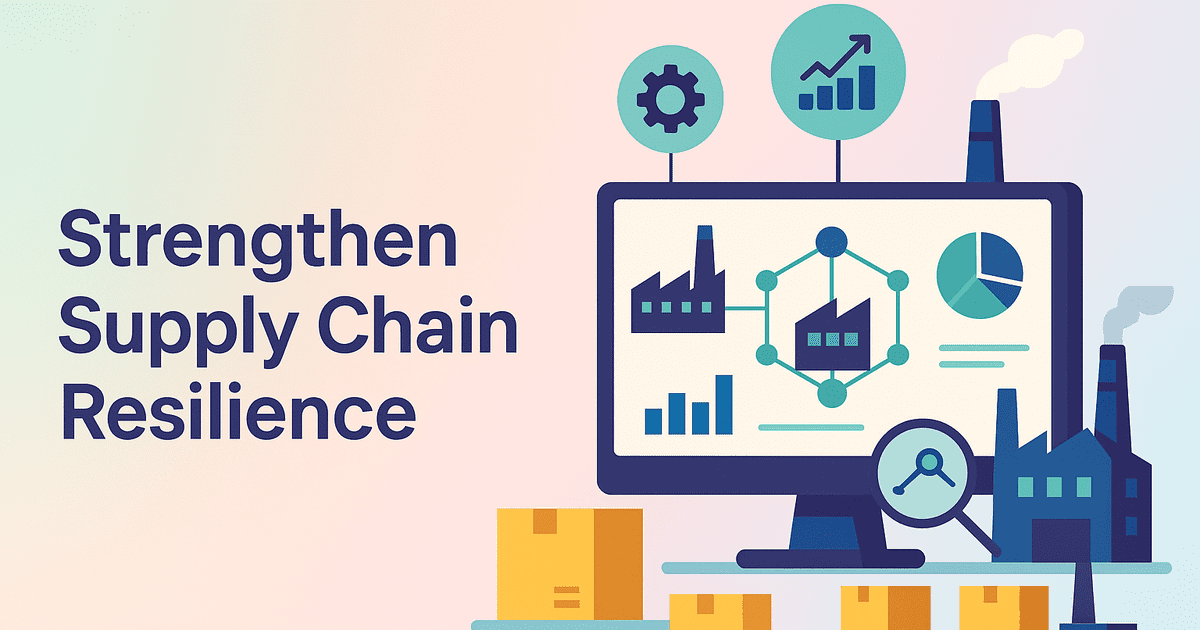
The financial and operational stakes are enormous. According to a report by Resilinc, the average financial impact of a supply chain disruption in the industrial sector exceeds $180 million per event. For engineered equipment, a delay in receiving a critical compressor or control system can idle an entire facility, leading to millions in lost production daily. Beyond immediate costs, there are reputational damages and contractual penalties. A resilient engineered equipment supply chain is, therefore, a direct contributor to the bottom line and project success. It transforms from a cost center into a value driver.
# 5 Foundational Strategies for a Resilient Supply Chain
Building robustness requires a multi-faceted approach. Here are five core strategies that leading companies implement.
1. DEEP SUPPLIER COLLABORATION AND VISIBILITY: Move beyond transactional relationships. Engage key suppliers in joint planning sessions. Implement digital platforms that provide real-time visibility into their production schedules, inventory levels, and potential bottlenecks. This proactive approach is far superior to reactive problem-solving.
2. DIVERSIFICATION AND LOCALIZATION: Over-reliance on a single geographic region or supplier is a critical vulnerability. Develop a vetted list of alternative suppliers for critical components. Furthermore, explore near-shoring or local manufacturing options for strategic items to reduce lead times and geopolitical risk.
3. DIGITAL TWIN AND INVENTORY OPTIMIZATION: Leverage technology like digital twins—virtual replicas of physical assets—to simulate supply chain scenarios and predict failures. Use advanced analytics to optimize inventory levels of spare parts, balancing holding costs against the risk of downtime.
4. STANDARDIZATION WHERE POSSIBLE: While customization is often necessary, work with engineering teams to standardize components and specifications across projects where feasible. This reduces complexity, increases buying leverage, and simplifies the supplier landscape.
5. INVEST IN TALENT AND PROCESSES: Technology alone is not enough. Develop a team with expertise in both supply chain management and the technical aspects of engineered equipment. Formalize processes for risk assessment, contingency planning, and supplier performance management.
# Technology as the Enabler: Key Tools
Modern supply chains are powered by technology. For engineered equipment, several tools are non-negotiable. An advanced ERP (Enterprise Resource Planning) system forms the backbone, integrating engineering, procurement, and logistics data. IoT (Internet of Things) sensors on equipment in transit provide real-time location and condition monitoring, crucial for high-value shipments. Blockchain is emerging for enhancing traceability and authenticity in complex, multi-tier supplier networks. According to Gartner, by 2026, over 50% of large global companies will be using AI, IoT, or blockchain in their supply chain operations to unlock new levels of performance. The right tech stack turns data into actionable intelligence.
# Choosing Your Supply Chain Partner: A Critical Decision
Many organizations partner with specialized third-party logistics providers or engineering procurement firms. Selecting the right partner is crucial. Below is a comparison of two common approaches.
| CRITERIA | TRADITIONAL 3PL (LOGISTICS FOCUSED) | SPECIALIZED ENGINEERED EQUIPMENT PARTNER |
|---|---|---|
| Core Expertise | Transportation, warehousing, freight forwarding. | Technical procurement, heavy-lift logistics, customs for engineered goods. |
| Supplier Network | Broad, general freight network. | Deep, industry-specific network of OEMs and component manufacturers. |
| Risk Management | Focuses on shipment delays and damage. | Proactive management of technical, regulatory, and project timeline risks. |
| Value Addition | Cost reduction in moving goods. | Ensures technical compliance, manages total cost of ownership, supports commissioning. |
| Best For | Standardized equipment with less complexity. | Custom, mission-critical engineered systems and complex projects. |
# Implementing a Supply Chain Risk Assessment: A Step-by-Step Guide
A formal risk assessment is not optional. Here is a practical guide to conducting one for your engineered equipment supply chain.
STEP 1: MAP YOUR END-TO-END NETWORK. Identify every tier-1 and critical tier-2 supplier for your key engineered assets. Document the specific parts they provide and their locations.
STEP 2: IDENTIFY RISK CATEGORIES. Categorize potential risks: geopolitical (trade wars), operational (supplier financial health), logistical (port congestion), and technical (single-source dependency).
STEP 3: ASSESS PROBABILITY AND IMPACT. For each risk, rate its likelihood of occurring and the potential operational/financial impact on a scale (e.g., High, Medium, Low).
STEP 4: DEVELOP MITIGATION PLANS. For high-probability, high-impact risks, create specific action plans. This could be qualifying an alternate supplier, increasing safety stock, or redesigning a component.
STEP 5: MONITOR AND REVIEW. Establish key risk indicators (KRIs) and review the assessment quarterly or in response to major global events. This is a living process.
# Common Pitfalls to Avoid in Your Strategy
WARNING: EVEN WELL-INTENTIONED STRATEGIES CAN FAIL IF THESE PITFALLS ARE IGNORED.
A major mistake is treating the engineered equipment supply chain with the same tactics used for commodity items. Aggressive cost-cutting on procurement without understanding technical trade-offs can lead to catastrophic failures. Another pitfall is siloed information. When engineering, procurement, and operations teams do not share data, decisions are made in a vacuum, increasing risk. Finally, do not neglect the human element. In our team’s experience, the most sophisticated digital tool fails if the people using it are not trained or bought into the new process. Change management is as important as software implementation.
# The Future: Sustainability and Circular Models
The future of the engineered equipment supply chain is not just resilient, but also sustainable. There is growing pressure and opportunity to adopt circular economy principles. This involves designing equipment for easier disassembly, remanufacturing, and recycling. Forward-thinking companies are creating supply chains that can take back end-of-life equipment, refurbish critical components, and feed them back into the supply stream. This reduces environmental impact, secures access to valuable materials, and creates new revenue streams. It represents the next evolution in supply chain maturity.
# Your Actionable Checklist for Supply Chain Resilience
Do not let this remain theoretical. Use this checklist to start strengthening your engineered equipment supply chain today.
– Conduct a thorough mapping of all suppliers for your top five critical assets.
– Initiate a formal risk assessment workshop with cross-functional teams.
– Evaluate and invest in one key technology that addresses your biggest visibility gap.
– Review and standardize specifications for at least one commonly used component family.
– Establish regular business review meetings with your top three engineered equipment suppliers.
– Develop a documented contingency plan for your single most important sourced component.
– Audit and optimize your critical spare parts inventory levels using usage data.
Building a world-class engineered equipment supply chain is a journey. It requires strategic investment, cross-functional collaboration, and a shift from reactive firefighting to proactive orchestration. By implementing the strategies outlined here, you can transform this complex network from a source of vulnerability into a durable competitive advantage.