





# The Ultimate Guide to Supply Chain Data Sets: 7 Sources and How to Use Them
Navigating the world of supply chain data sets can feel overwhelming. Every executive knows data is the new oil, but finding the right, high-quality datasets to fuel your analytics and AI projects is a major challenge. This guide cuts through the noise. We will explore what makes a supply chain data set valuable, where to find authoritative sources, and provide a practical framework for putting this data to work. Whether you are building predictive models, benchmarking performance, or seeking transparency, the right data is your starting point.
The core value of a supply chain data set lies in its ability to transform uncertainty into insight. However, not all data is created equal. The difference between a generic dataset and a tailored, granular one can be the difference between a flawed forecast and a resilient operation.
## Understanding Supply Chain Data Types and Their Uses
Before hunting for data, you must know what you need. Supply chain data sets typically fall into several key categories, each serving a distinct purpose.
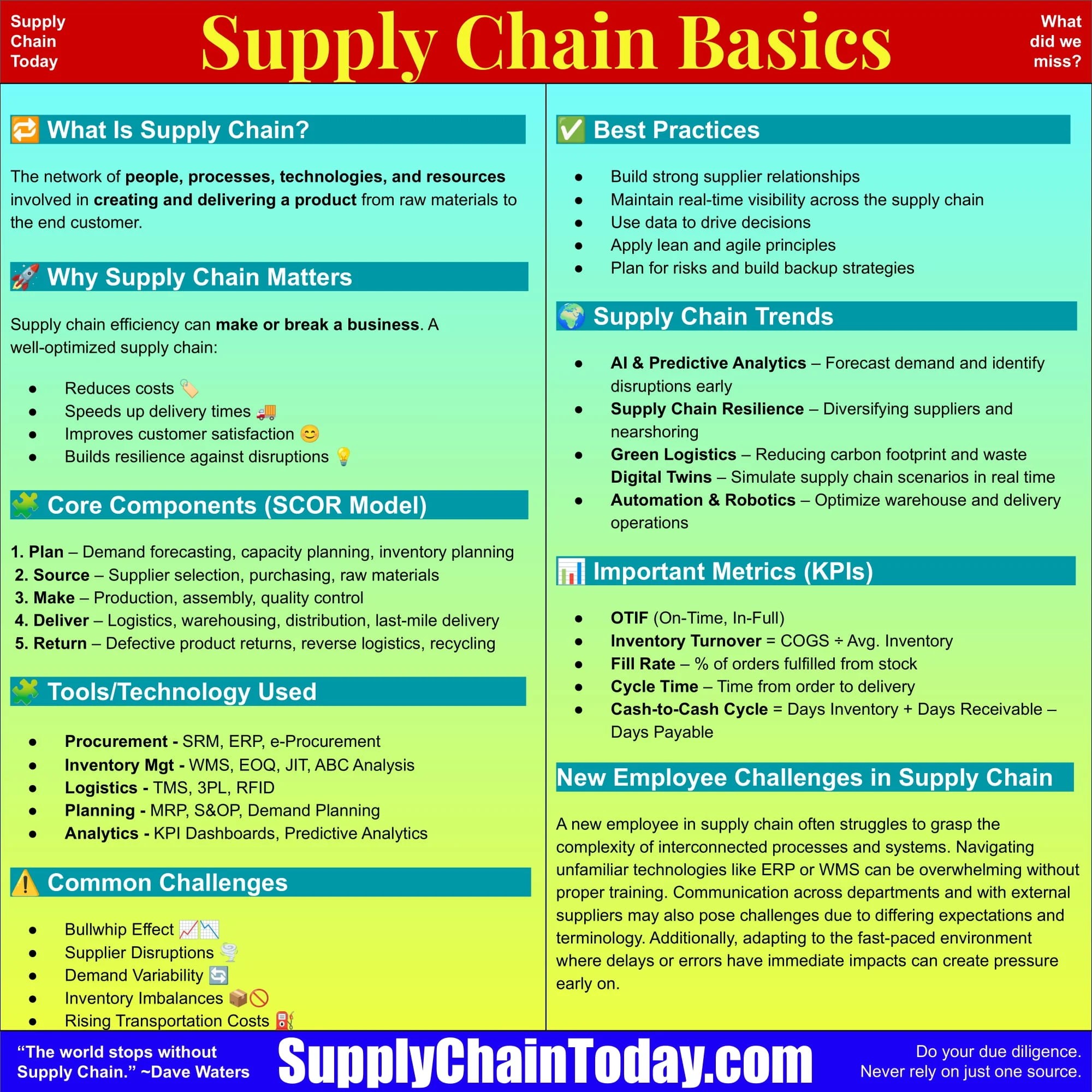
Operational data covers the day-to-day: order volumes, shipment tracking, warehouse inventory levels, and production throughput. This is the lifeblood for monitoring current performance. Planning data includes forecasts, demand signals, and capacity models, used to align resources with future needs. External data is increasingly critical, encompassing weather patterns, geopolitical risk indices, port congestion reports, and commodity prices. This type of data helps model disruptions. Finally, financial data ties everything together, linking cost-to-serve, freight spend, and working capital metrics to operational activities.
## Top 7 Authoritative Sources for Supply Chain Data Sets
Finding reliable data is half the battle. Here are seven credible sources, ranging from public to commercial.
PUBLIC SECTOR AND ACADEMIC REPOSITORIES: These are often free and excellent for research or building proof-of-concept models. The U.S. Bureau of Transportation Statistics offers immense datasets on freight flows, trade, and infrastructure. The European Union Open Data Portal provides similar data for European supply chains. University research centers, like the MIT Center for Transportation & Logistics, frequently publish curated datasets from their projects.
INDUSTRY CONSORTIA AND ASSOCIATIONS: Organizations like GS1 (standards for barcodes and EDI) and the Association for Supply Chain Management (ASCM) provide frameworks and sometimes benchmark data that help normalize information across companies.
COMMERCIAL DATA VENDORS: For ready-to-use, cleaned, and often real-time data, specialized vendors are key. These firms aggregate and enrich data from myriad sources. Examples include Panjiva (global trade transactions), Resilinc (supplier and disruption data), and project44 (real-time transportation visibility).
The choice between these sources depends on your specific need for freshness, granularity, and budget. To help you compare, here is a breakdown of two common approaches.
| Source Type | Example | Key Strengths | Typical Use Case | Considerations |
|---|---|---|---|---|
| Public / Academic | U.S. BTS Freight Data | Free, transparent, good for macro-trends | Market research, economic modeling, academic projects | Often has a significant time lag, may lack granular detail |
| Commercial Vendor | Real-time Visibility Platform | High frequency, detailed, pre-processed, often API-accessible | Operational tracking, dynamic routing, predictive ETA, risk management | Involves subscription cost, may require integration work |
## A Step-by-Step Guide to Sourcing and Validating Your Data
Finding a dataset is just the beginning. You must ensure it is fit for purpose. Follow this five-step process.
STEP 1: DEFINE YOUR OBJECTIVE PRECISELY. Ask: What specific question am I trying to answer? “Improve forecasting” is vague. “Reduce forecast error for SKU category A in Region B by 10% using point-of-sale data” is actionable. This clarity dictates the required data attributes.
STEP 2: IDENTIFY CRITICAL DATA ATTRIBUTES. List the non-negotiable fields. For a demand forecast, you likely need historical sales, product identifiers, time stamps, and perhaps promotional calendars. For a logistics model, you need origin, destination, carrier, cost, and transit time.
STEP 3: EVALUATE SOURCE CREDIBILITY AND FRESHNESS. Investigate the provider. How is the data collected? Is it self-reported, sensor-based, or aggregated? What is the update frequency? A dataset updated quarterly is useless for real-time track-and-trace.
STEP 4: ASSESS DATA QUALITY. Look for completeness, consistency, and accuracy. Are there glaring gaps or null values? Do date formats align? A quick spot-check against known values can reveal quality issues. According to a 2024 report by Gartner, poor data quality costs organizations an average of $12.9 million per year, highlighting the critical need for validation (来源: Gartner).
STEP 5: PLAN FOR INTEGRATION AND GOVERNANCE. Consider how the new data will flow into your existing systems. Who will own it? How will it be cleaned and maintained over time? Establishing governance early prevents the creation of yet another data silo.
## Common Pitfalls and How to Avoid Them
Even with the best intentions, teams make mistakes when working with supply chain data sets. Here is a crucial warning.
WARNING: THE AGGREGATION TRAP. One of the most common and damaging mistakes is using data that is too aggregated. For instance, using monthly, country-level shipment data to diagnose warehouse inefficiencies is futile. The insight is lost in the averages. Always seek the most granular data available that your use case can support. Granularity preserves the signal you need to detect root causes.
Another frequent error is ignoring temporal alignment. Merging datasets with different time zones, reporting periods, or fiscal calendars will create erroneous correlations. Always normalize time data as a first step.
## From Data to Decision: A Practical Implementation Checklist
You have sourced and validated your supply chain data sets. Now what? Use this actionable checklist to move from raw data to business value. Do not proceed without completing each item.
FINALIZE THE BUSINESS QUESTION AND SUCCESS METRICS.
CLEAN AND PREPROCESS THE DATA: HANDLE MISSING VALUES AND OUTLIERS.
ENGINEER KEY FEATURES RELEVANT TO THE PROBLEM (E.G., LEAD TIME VARIABILITY, SEASONAL INDICATORS).
BUILD A SIMPLE BASELINE MODEL BEFORE ADVANCING TO COMPLEX AI SOLUTIONS.
DEPLOY WITH A FEEDBACK LOOP TO CONTINUOUSLY IMPROVE DATA QUALITY AND MODEL ACCURACY.
DOCUMENT THE ENTIRE PROCESS, DATA SOURCES, AND ASSUMPTIONS.
SHARE INSIGHTS VISUALLY WITH STAKEHOLDERS TO DRIVE ACTION.
In our team’s experience, the most successful projects start small. One client aimed to reduce air freight costs. Instead of a massive overhaul, we sourced a specific dataset on regional port congestion and integrated it with their planned shipment routes. This allowed for a simple “if-then” logic in their planner’s workflow, saving millions within a quarter. The power was in pairing a focused question with a precise, external data set.
The landscape of supply chain data is vast, but the path to value is clear. Begin with a laser-focused objective, source data with rigor, and validate relentlessly. The right data sets are not just informational; they are the foundational assets that build competitive, resilient, and intelligent supply chains. Start your search today, but always let your business problem guide you.