





Service function chaining, often abbreviated as SFC, is a critical architectural concept in modern networking. It provides a method to steer traffic through an ordered sequence of network services. Think of it as a pre-defined path or pipeline that data packets must travel. This path is not just about connectivity. It is about applying specific functions like security, optimization, and analysis in a specific order. This guide will explain everything you need to know. We will cover the core architecture, its undeniable benefits, and a practical implementation roadmap.
WHAT IS SERVICE FUNCTION CHAINING?
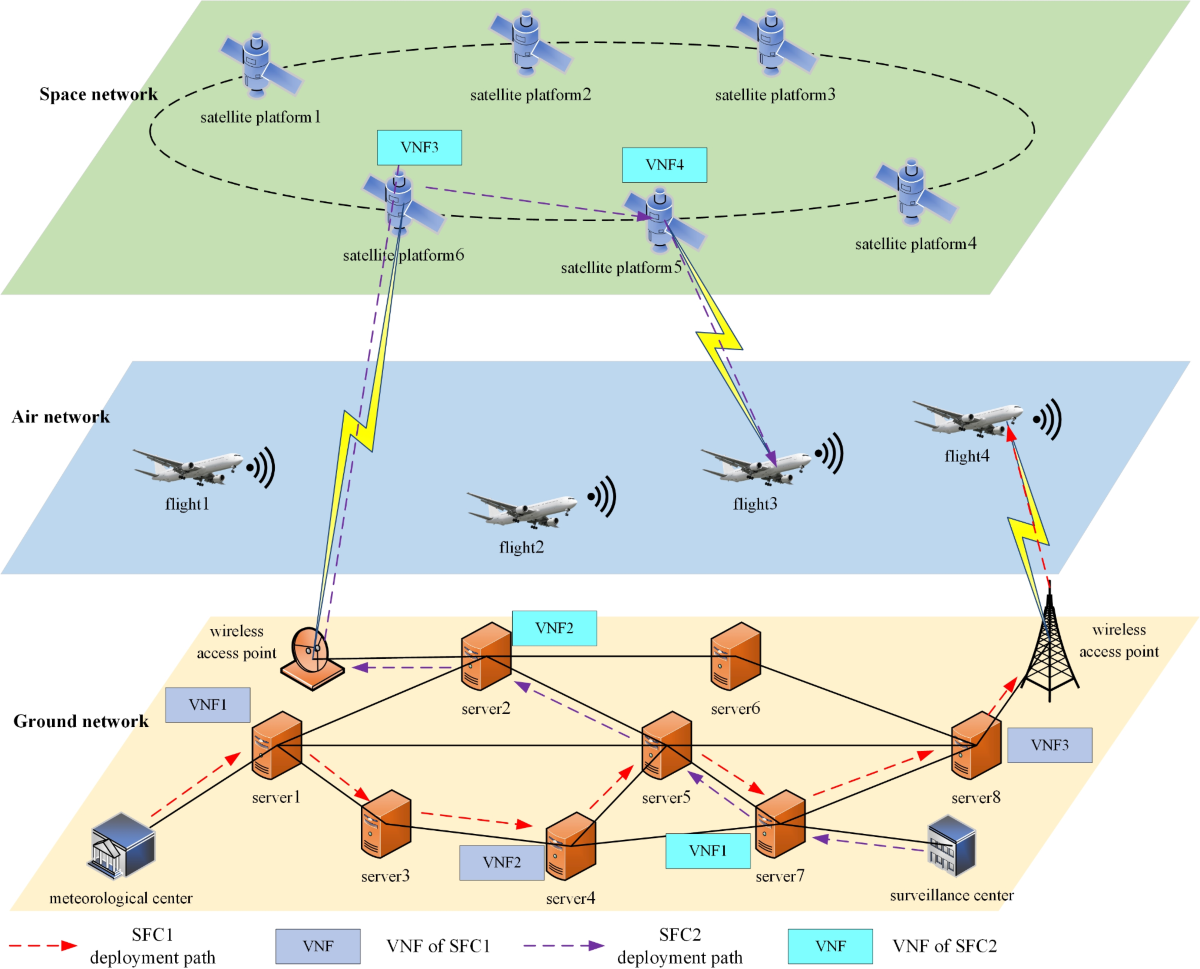
At its heart, service function chaining is about orchestration. Traditional networks deploy services like firewalls or load balancers as standalone boxes. Traffic routing between them is often static and complex to manage. SFC introduces a layer of intelligence. It abstracts the physical network topology. It allows administrators to define a chain of virtualized network functions, or VNFs. The network then automatically steers the appropriate traffic flows through that exact sequence. This moves the control from a device-centric model to a service-centric one. The goal is to create flexible, application-aware service delivery.
KEY ARCHITECTURAL COMPONENTS OF SFC
Understanding service function chaining requires knowing its building blocks. The architecture, as defined by the IETF, consists of several key elements.
Service Function, or SF, is the actual entity responsible for specific treatment of received packets. Examples include a deep packet inspection engine, a load balancer, or an encryption device.
Service Function Chain is the abstracted view. It defines the required order of network services that traffic must pass through. A simple chain could be: Firewall -> Intrusion Prevention System -> WAN Optimizer.
Service Function Path is the actual, instantiated version of the chain in the network. It includes the specific physical or virtual nodes that will execute the functions.
Classifier is the entry point. It examines incoming packets and assigns them to a specific service function path based on policies. Policies can be based on IP address, application type, or user identity.
SFC Encapsulation, often using protocols like Network Service Header, or NSH, is the glue. It adds metadata to the packet. This metadata contains the path identifier and location within the chain. It allows each service function to know what to do next without complex routing lookups.
BENEFITS AND DRIVERS FOR ADOPTION
The shift towards service function chaining is driven by powerful advantages. It directly addresses pain points in legacy network designs.
First, it enables incredible agility and flexibility. New services can be inserted into a chain without reconfiguring the underlying network. This is vital for DevOps and continuous deployment. Second, it optimizes resource utilization. Traffic can be steered through virtualized functions running on commodity hardware. This reduces reliance on expensive, proprietary appliances. Third, it enhances service visibility and control. Because the path is defined and tagged, operators have a clear view of how traffic is processed. This simplifies troubleshooting and compliance auditing.
According to a 2023 report by Enterprise Management Associates, organizations implementing advanced service orchestration, including SFC, reduced service deployment times by up to 70 percent compared to manual methods. This data highlights the operational efficiency gain.
COMMON CHALLENGES AND MISCONCEPTIONS
Despite its promise, service function chaining is not a magic bullet. A common misconception is that it is only for large cloud providers. In reality, any organization with a software-defined network backbone can benefit. Another mistake is underestimating the need for robust classification policies. If the classifier rules are poorly defined, traffic will be misdirected, breaking the service chain.
A major technical challenge is performance. Adding encapsulation headers and processing through multiple software-based functions can introduce latency. Careful design and hardware acceleration for key functions are necessary. Furthermore, interoperability between vendors remains a hurdle. While standards like NSH exist, proprietary implementations can create lock-in. Organizations must insist on standards-based solutions during procurement.
SERVICE FUNCTION CHAINING VS. TRADIONAL NETWORKING
To see the contrast clearly, let us compare the two approaches side-by-side.
| Aspect | Traditional Networking | Service Function Chaining |
|---|---|---|
| Service Insertion | Manual, static routing changes per device. | Dynamic, policy-driven via centralized controller. |
| Traffic Steering | Based on destination IP and routing tables. | Based on application/policy and path ID in packet header. |
| Topology Dependency | High. Service order is fixed by physical layout. | Low. Services are abstracted from physical topology. |
| Scalability | Difficult. Adding a service often requires network redesign. | Easier. New functions can be added to the chain as needed. |
| Management Plane | Distributed across individual devices. | Centralized orchestration and control. |
This comparison shows why SFC is foundational for agile, cloud-native networks.
IMPLEMENTATION: A 5-STEP PRACTICAL GUIDE
Based on my experience advising enterprise clients, a phased approach to implementing service function chaining yields the best results. Do not try to boil the ocean.
STEP 1: ASSESS AND DEFINE USE CASES.
Start with a clear, high-value problem. A perfect first candidate is securing east-west traffic in a data center. Define the required chain, for example: Micro-segmentation Gateway -> Threat Inspection -> Application Firewall. This focused scope makes the project manageable.
STEP 2: EVALUATE YOUR INFRASTRUCTURE READINESS.
Service function chaining requires an underlying transport network that supports overlay encapsulation, like VXLAN or GRE. Ensure your physical switches and routers can handle this. Also, verify that your existing or planned virtual network functions are SFC-aware and support the chosen encapsulation protocol, typically NSH.
STEP 3: SELECT THE ORCHESTRATION PLATFORM.
You need a controller. This could be part of a larger SDN solution like VMware NSX, Cisco ACI, or an open-source platform like OpenDaylight. The orchestrator is the brain. It will define chains, push policies to classifiers, and manage the lifecycle of service functions.
STEP 4: DEPLOY AND CONFIGURE THE CLASSIFIER.
The classifier is the critical enforcement point. Deploy it at the traffic ingress points, such as at hypervisor vSwitches or top-of-rack switches. Configure the classification policies meticulously. For our use case, policies might classify traffic based on source workload tier and destination application port.
STEP 5: TEST, VALIDATE, AND ITERATE.
Begin with a non-production workload. Use network testing tools to generate traffic and validate that packets are correctly tagged, follow the defined path, and are processed by each function in sequence. Monitor performance metrics like latency and throughput. Only after rigorous validation should you gradually roll out to production.
WARNING: AVOID THIS COMMON PITFALL
A frequent error teams make is over-chaining. Adding too many service functions into a single chain can create a “service hairpin” that destroys performance. Each function adds processing delay. Long chains can make latency unacceptable for sensitive applications like voice or real-time databases. Always apply the principle of minimal necessary service insertion. If a function is not needed for a specific application flow, do not include it in that chain. Create multiple, tailored chains for different application profiles.
REAL-WORLD APPLICATIONS AND FUTURE TRENDS
Service function chaining is already powering real-world scenarios. In telecoms, it is used for virtualized customer premises equipment, or vCPE. The service provider can dynamically chain a firewall, parental controls, and a VPN for a home broadband subscriber. In enterprise data centers, it enables granular security for microservices, ensuring each service-to-service call is inspected.
Looking ahead, the integration with 5G core networks is a major trend. Here, SFC is used to create network slices with specific service chains for different use cases, like massive IoT or ultra-reliable low-latency communications. Furthermore, the concept is evolving towards intent-based networking. The administrator states the desired outcome, and the system automatically composes and deploys the appropriate service function chain.
In our team’s work with a financial services client, we implemented service function chaining to isolate their trading platforms. The result was a more secure and auditable network where compliance flows were guaranteed to pass through specific monitoring tools. This not only improved security but also simplified their regulatory reporting process.
A study published in the IEEE Communications Surveys & Tutorials notes that by 2025, over 60 percent of enterprise network infrastructure spending will be on software-defined and virtualized solutions, with service chaining being a core enabling technology. This signals a permanent shift in how networks are built.
CONCLUSION AND ACTIONABLE CHECKLIST
Service function chaining represents a fundamental shift from rigid, device-centric networks to fluid, service-centric ones. It is the backbone of modern network automation, security, and agility. By abstracting services from the physical hardware and using policy-based steering, it delivers unprecedented operational flexibility.
Before you begin your SFC journey, use this practical checklist to ensure you are prepared.
IDENTIFY A HIGH-IMPACT, LIMITED-SCOPE INITIAL USE CASE.
VERIFY THAT YOUR UNDERLAY NETWORK SUPPORTS THE REQUIRED OVERLAY ENCAPSULATION.
ENSURE YOUR CANDIDATE NETWORK FUNCTIONS ARE SFC-AWARE AND INTEROPERABLE.
SELECT A CENTRAL ORCHESTRATION PLATFORM THAT FITS YOUR OPERATIONAL MODEL.
DESIGN CLASSIFICATION POLICIES THAT ARE PRECISE AND ALIGNED WITH BUSINESS LOGIC.
PLAN FOR PERFORMANCE TESTING AND BASELINING BEFORE FULL DEPLOYMENT.
AVOID CREATING LONG, COMPLEX CHAINS THAT INTRODUCE EXCESSIVE LATENCY.
DOCUMENT THE SERVICE CHAINS AND POLICIES FOR ONGOING MANAGEMENT AND TROUBLESHOOTING.