





# The Ultimate Guide to Luxury Houses in Germany: Markets, Locations, and Investment Insights
Germany presents a unique and compelling proposition for luxury real estate. It is not just about opulent villas, it is about stability, architectural excellence, and a high quality of life within a robust economic framework. This guide delves deep into the world of luxury houses in Germany, offering you a comprehensive look at prime locations, market dynamics, and essential considerations for buyers and investors.
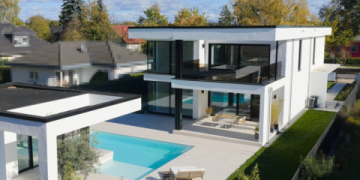
The appeal extends beyond classic beauty. German luxury properties often blend cutting-edge design, energy efficiency, and smart home technology with timeless craftsmanship. Whether you seek a historic villa on Lake Constance, a modernist masterpiece in Berlin, or a secluded estate in Bavaria, understanding the landscape is key.
## Understanding the German Luxury Property Market
The market for high end real estate in Germany is distinct from other global hubs. It is characterized by a relative scarcity of supply, especially in top cities, and a strong demand driven by both domestic and international buyers. According to a 2023 report by Engel & Völkers, prices for top-tier properties in German metropolitan areas have shown remarkable resilience, with prime segments in cities like Munich and Hamburg continuing to see steady value appreciation (来源: Engel & Völkers Luxury Market Report).
A key driver is economic stability. Germany’s strong economy acts as a magnet for high-net-worth individuals seeking a safe haven for their capital. Unlike markets prone to speculative bubbles, German luxury real estate often grows at a moderate, sustainable pace. This makes it an attractive long-term investment, not just a lifestyle purchase.
## Top Regions for Luxury Houses in Germany
Germany’s federal structure means luxury is not concentrated in one capital. Different regions offer vastly different lifestyles and property types.
MUNICH AND BAVARIA: The undisputed leader. Munich boasts the highest prices per square meter in the country. Luxury here means exclusive villas in districts like Bogenhausen or Solln, or magnificent country estates in the surrounding Alpine foothills. The blend of cultural richness, economic power, and natural beauty is unmatched.
HAMBURG AND THE NORTH: The affluent Hanseatic city offers luxury along the Alster lakes and in suburbs like Blankenese, with its charming villas cascading down the Elbe riverbank. Properties here often feature water views and a distinct, understated elegance.
BERLIN: The capital’s luxury market is dynamic and international. While classic villas in Grunewald or Dahlem are perennially sought-after, there is a growing trend for luxurious, architecturally significant penthouses and townhouses in central districts like Mitte and Prenzlauer Berg.
LAKE CONSTANCE AND THE SOUTH: For a resort-like lifestyle, the shores of Lake Constance are prime territory. Luxury villas and modern estates with lake views and private docks represent a pinnacle of relaxed, yet sophisticated, living. The Black Forest region also offers secluded luxury retreats.
RHINE-MAIN REGION (FRANKFURT): As Germany’s financial heart, Frankfurt attracts a global clientele. Luxury properties are found in the Taunus hills, offering spacious villas with quick access to the city’s business centers and international airport.
## Key Features of German Luxury Real Estate
What defines a luxury house in Germany? It goes far beyond square footage.
ARCHITECTURAL DIVERSITY: You will find meticulously restored historic villas (Jugendstil, Bauhaus), sleek contemporary designs with clean lines and glass facades, and robust traditional country homes (Fachwerkhaus) updated to modern luxury standards.
TECHNOLOGY AND SUSTAINABILITY: German engineering shines here. Top properties almost invariably feature state-of-the-art home automation systems, security, and integrated audio-visual setups. Crucially, energy efficiency (KfW standards) is not an afterthought but a core component of luxury, with features like geothermal heating, photovoltaic systems, and superior insulation.
QUALITY OF CONSTRUCTION: The reputation for German precision and quality is evident. Expect superior materials, flawless craftsmanship, and meticulous attention to detail in everything from joinery to flooring.
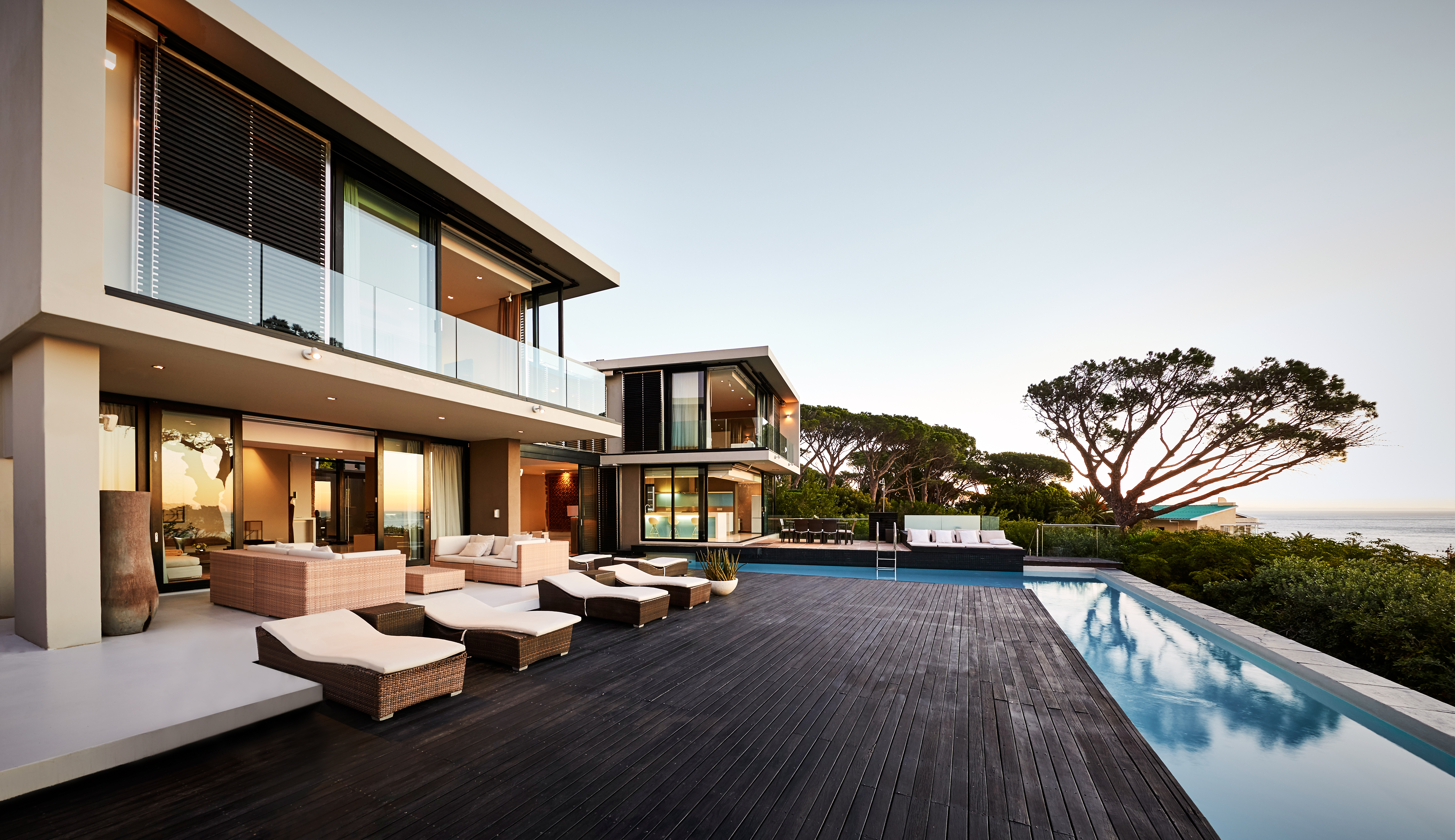
AMENITIES AND SPACE: Luxury means space, both indoors and out. Spacious living areas, chef’s kitchens, spa-like bathrooms, wine cellars, and home gyms are common. Outdoor living is emphasized with landscaped gardens, terraces, swimming pools, and often, generous plot sizes ensuring privacy.
## The Buying Process: A Step-by-Step Guide
Navigating the purchase of a luxury house in Germany requires local expertise. Here is a simplified guide.
STEP 1: FINANCIAL PREPARATION AND ENGAGING PROFESSIONALS. Secure your financing pre-approval if needed. Crucially, engage a bilingual lawyer (Rechtsanwalt) specializing in real estate and a reputable buyer’s agent (Makler) who knows the exclusive luxury segment. Their fees are a worthwhile investment.
STEP 2: PROPERTY SEARCH AND VIEWING. Your agent will access off-market listings (a significant portion of luxury deals) and arrange viewings. Be prepared to act decisively; desirable properties move quickly.
STEP 3: MAKING AN OFFER AND NEGOTIATING. Your lawyer and agent will help you draft a formal purchase offer (Kaufanbot). Negotiations on price and terms are standard. Once accepted, you typically sign a reservation agreement and pay a deposit.
STEP 4: DUE DILIGENCE AND NOTARY CONTRACT. This is the most critical phase. Your lawyer conducts exhaustive due diligence on the property title, land registry, any encumbrances, and planning permissions. The final sale is concluded before a German notary (Notar), who drafts the official purchase contract (Kaufvertrag) and oversees its signing.
STEP 5: TRANSFER OF FUNDS AND REGISTRATION. After the notary appointment, you transfer the purchase price to an escrow account. The notary then handles the registration of the new ownership in the land register (Grundbuch). Only after registration is the purchase complete and funds released to the seller.
## Common Pitfalls and How to Avoid Them
WARNING: UNDERESTIMATING THE COMPLEXITY
Many international buyers make the mistake of approaching the German luxury market without proper guidance. The legal and tax framework is complex. A common error is not fully understanding the additional costs (Nebenkosten), which can add 10-15% to the purchase price for notary fees, land transfer tax (Grunderwerbsteuer, which varies by federal state from 3.5% to 6.5%), and agent commission.
Another frequent oversight is neglecting a thorough, independent structural survey (Gutachter). Even for a luxury property, hidden issues with the building fabric can exist. Do not rely solely on the seller’s disclosures. Investing in a professional survey can save immense cost and trouble later.
## Comparing Prime German Luxury Markets
To illustrate the differences, here is a comparison of two premier markets.
| Feature | Munich & Upper Bavaria | Berlin |
|---|---|---|
| PRICE PER SQ.M (PRIME) | Highest in Germany (€15,000 – €25,000+) | Significantly lower than Munich (€9,000 – €15,000) |
| MARKET DRIVER | Corporate HQs, established wealth, scarcity | International appeal, cultural capital, dynamic growth |
| TYPICAL PROPERTY STYLE | Villas, substantial country estates, Alpine chalets | Villas in green districts, luxury penthouses, renovated townhouses |
| LIFESTYLE APPEAL | Proximity to Alps, traditional yet cosmopolitan, high quality of life | Cosmopolitan, artistic, vibrant nightlife, historically rich |
| INVESTMENT PROFILE | Stable, high-value asset with lower yield, capital preservation | Higher potential for capital growth, more dynamic market |
## The Investment Perspective
From an investment standpoint, luxury houses in Germany offer more than just a home. They are tangible assets in a politically and economically stable country. While rental yields in the absolute prime segments may be modest (often 2-3%), the primary value is in long-term capital appreciation and wealth preservation. According to data from the German Association of Pfandbrief Banks (vdp), price indices for detached and semi-detached houses in Germany’s major cities have consistently outperformed inflation over the past decade (来源: vdp Real Estate Price Index).
Based on my experience advising international clients, the most successful investments are those where the buyer aligns the property choice with a clear personal or financial goal—be it a primary residence, a holiday home with rental potential, or a pure capital allocation within a diversified portfolio. Emotional purchases can be successful, but a disciplined, research-backed approach always yields better long-term results.
## Your Checklist for Purchasing a Luxury House in Germany
FINAL CHECKLIST FOR SUCCESS
1. Define your budget, including all additional purchase costs (approx. 10-15% of price).
2. Engage a specialized real estate lawyer and a reputable buyer’s agent.
3. Secure financing pre-approval from a bank familiar with international clients.
4. Prioritize locations based on lifestyle, not just investment metrics.
5. Conduct an independent structural survey on your shortlisted property.
6. Understand the tax implications, including annual property tax and potential future sale.
7. Review all notary contracts thoroughly with your lawyer before signing.
8. Plan for ongoing costs: maintenance, utilities, property management if absent.
9. Consider your long-term plan: will this be a permanent home, a seasonal residence, or a rental investment?
10. Embrace the process with patience and expert support; the German market rewards diligence.
The journey to owning a luxury house in Germany is a significant undertaking, but for those who value quality, stability, and an exceptional living environment, it is an immensely rewarding one. With the right preparation and partners, you can successfully navigate this sophisticated market and secure a property that meets your highest expectations.