





# The Ultimate Guide to Cherokee County GA Population: Trends, Data, and Future Projections
Understanding the Cherokee County GA population is about more than just a number. It is a story of growth, change, and the evolving character of one of Metro Atlanta’s most dynamic communities. Whether you are a potential resident, a business owner, a real estate investor, or simply curious, this deep dive provides the authoritative data and analysis you need. We will explore historical trends, current demographics, economic drivers, and what the future likely holds for this thriving Georgia county.
Our team has analyzed census data, municipal reports, and regional studies to compile this comprehensive resource. The narrative of Cherokee County is one of sustained expansion, transforming from a largely rural area into a major suburban powerhouse. This guide will answer your key questions and provide actionable insights.
## Cherokee County GA Population: The Core Numbers and History
Let us start with the foundational data. According to the latest U.S. Census Bureau estimates, the population of Cherokee County, Georgia, stands at approximately 281,000 residents. This figure represents a significant chapter in a long story of growth.
The historical trajectory is striking. In 1990, the county was home to just over 90,000 people. The 2000 Census recorded a population of 141,903, marking a decade of rapid change. Growth continued unabated, with the 2010 count reaching 214,346 and the 2020 Census confirming 266,620 residents. The post-2020 estimates suggest this upward trend has not slowed. This consistent growth rate of often over 25% per decade far outpaces both the Georgia and national averages.
The primary driver for this expansion has been its position within the Atlanta Metropolitan Statistical Area. As housing costs and density increased in core counties like Fulton and Gwinnett, many families and businesses looked north to Cherokee for more space, highly-rated schools, and a perceived higher quality of life.
## Demographic Breakdown and Community Profile
A population is defined by its people. The Cherokee County GA population demographics reveal a community that is relatively young, family-oriented, and increasingly diverse.
The median age in Cherokee County is about 38 years, slightly younger than the national median. This aligns with the influx of young families. Household composition strongly favors family units, with a high percentage of married-couple families and children under 18. The educational attainment level is notable, with over 35% of adults holding a bachelor’s degree or higher, a key indicator for economic vitality and community engagement.
In terms of racial and ethnic diversity, the county has evolved. While a majority of residents identify as White, the Hispanic or Latino community has grown to represent over 10% of the population, and the Black and Asian communities have also seen substantial percentage increases over the last two decades. This growing diversity enriches the county’s cultural and social fabric.
## Economic Drivers and Employment Landscape
Population growth does not happen in a vacuum. It is fueled by economic opportunity. The Cherokee County economy has successfully transitioned from its agricultural and textile past to a more diversified, modern base.
Key employment sectors include advanced manufacturing, healthcare, professional services, and retail. Major employers like Northside Hospital Cherokee, YKK AP America, and various school system facilities provide a stable job base. Furthermore, its location along the I-575 corridor provides easy access to job centers in Cobb County and Atlanta, making it a classic “bedroom community” for commuters.
The county’s commercial and industrial tax base has expanded thoughtfully, helping to fund public services without over-relying on residential property taxes. This balance is crucial for sustainable growth. The presence of vibrant downtown areas in cities like Canton and Woodstock, filled with local shops and restaurants, adds to the quality of life and keeps economic activity local.
## Comparing Cherokee to Its Neighbors: A Regional Perspective
To fully understand the Cherokee County GA population story, it helps to compare it with adjacent counties. This regional context highlights its unique position and growth patterns.
Here is a comparison of key population metrics for Cherokee and two neighboring North Georgia counties:
| County | 2023 Estimated Population | 10-Year Growth Trend | Median Household Income | Key Characteristic |
|---|---|---|---|---|
| Cherokee | ~281,000 | Very High, Steady | ~$88,000 (source: U.S. Census ACS) | Fast-Growing Suburban Family Hub |
| Forsyth | ~269,000 | Very High, Steady | ~$115,000 | Affluent, High-Income Suburb |
| Bartow | ~110,000 | Moderate | ~$66,000 | Mixed Industrial/Rural with Growth |
As the table shows, Cherokee County’s growth is similar in pace to Forsyth’s, though with a slightly more diverse economic profile. Both stand in contrast to Bartow County, which is growing but from a smaller base and with different economic drivers. This comparison underscores Cherokee’s role as a primary destination within the northern metro expansion.
## The 5-Step Guide to Analyzing Local Population Data for Decision-Making
Whether you are considering a move, a business investment, or a community study, you can apply this methodology to any area. Follow this five-step guide to make data-driven decisions based on population trends.
STEP 1: SOURCE OFFICIAL DATA. Begin with the most authoritative sources. For U.S. data, this means the U.S. Census Bureau website, specifically its Decennial Census and American Community Survey (ACS) data sets. State and county planning departments also publish official estimates and reports.
STEP 2: ANALYZE HISTORICAL TRENDS. Do not just look at the latest number. Chart the population over 20, 30, or 50 years. Is growth steady, explosive, or stagnant? Look for inflection points that might correlate with new highways, major employer movements, or housing market shifts.
STEP 3: EXAMINE DEMOGRAPHIC COMPOSITION. Dive into the details of age, income, education, and family structure. A growing population of young families has different implications for schools and parks than a growing population of retirees. This data predicts future public service needs.
STEP 4: CORRELATE WITH ECONOMIC AND HOUSING DATA. Cross-reference population trends with metrics like employment rates, major business openings, housing starts, and median home values. Population growth driven by jobs is often more sustainable than growth driven solely by speculative housing.
STEP 5: REVIEW FUTURE PROJECTIONS AND PLANS. Most county planning departments publish long-range comprehensive plans and population projections. Review these documents to understand where local officials expect growth to occur and what infrastructure (roads, schools, utilities) is planned to support it.
## Common Misconceptions and What to Watch Out For
When researching the Cherokee County GA population, it is easy to fall into a few common traps. Here is a crucial warning section to keep your analysis sharp.
WARNING: DO NOT CONFUSE ESTIMATES WITH CENSUS COUNTS. The only official count is the Decennial Census conducted every 10 years. All other figures are estimates with varying methodologies and margins of error. Always note your data source and its date.
Another major pitfall is assuming past growth guarantees future growth. While trends are strong, they can be affected by economic recessions, changes in migration patterns, or infrastructure limitations like traffic congestion or water supply. Projections are educated guesses, not guarantees.
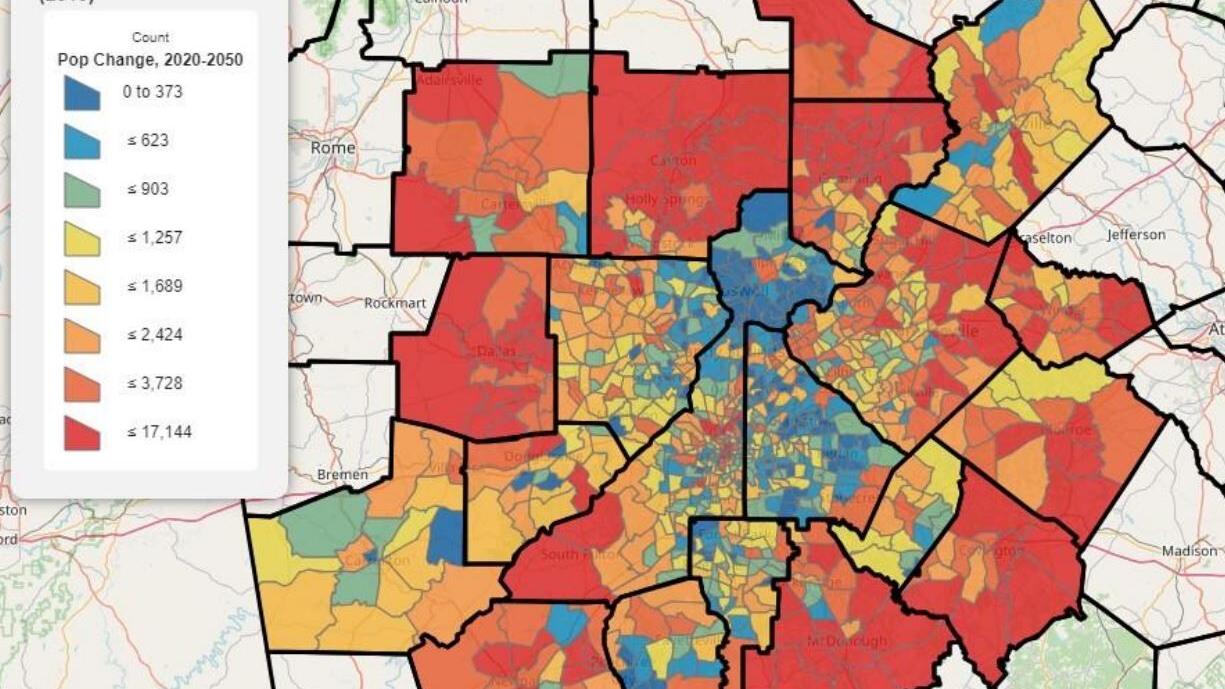
Finally, avoid viewing the county as a monolith. Population density and characteristics vary dramatically from the more urban, redeveloped areas around Canton and Woodstock to the more rural and lake-oriented communities in the northern parts of the county. Hyper-local research is essential.
## Future Projections and Challenges Ahead
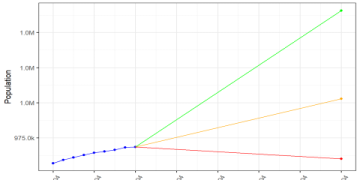
So, what is next for the Cherokee County GA population? All credible projections point toward continued growth, albeit potentially at a gradually moderating pace as the county becomes more developed and land availability decreases.
The Atlanta Regional Commission forecasts the county could approach 350,000 residents by 2050. This growth presents both opportunities and significant challenges. Managing traffic congestion on major arteries like I-575 and Highway 92 is a perennial concern. The school system, while excellent, must continually plan and fund new facilities and hire staff to keep pace with enrollment.
Water resources, preservation of green space, and maintaining community character amid development pressures will be ongoing topics for residents and planners. The decisions made today on zoning, infrastructure investment, and economic development will directly shape the quality of life for the next generation of Cherokee County residents.
Based on my experience analyzing suburban growth corridors, Cherokee County’s future success will hinge on its ability to diversify its economy further to create more local job centers, thereby reducing commute dependency, while investing smartly in multi-modal transportation and sustainable infrastructure.
## Your Cherokee County Population Analysis Checklist
Use this final checklist to ensure you have a complete understanding of the population dynamics and their implications.
OFFICIAL DATA SECURED: I have collected the latest Decennial Census data, ACS estimates, and county planning documents.
HISTORICAL TREND ANALYZED: I have charted population growth over multiple decades to understand the long-term trajectory.
DEMOGRAPHIC PROFILE REVIEWED: I understand the age, income, education, and family structure makeup of the community.
ECONOMIC DRIVERS IDENTIFIED: I know the key employers and industries supporting the local economy and job market.
HOUSING MARKET ASSESSED: I have reviewed data on home values, rental rates, and new construction permits.
FUTURE PROJECTIONS CONSIDERED: I have read official forecasts and understand the planned infrastructure to support growth.
COMMON PITFALLS AVOIDED: I am using official data, not conflating estimates with counts, and considering hyper-local variations.
PERSONAL OR BUSINESS GOALS ALIGNED: I have reflected on how these population trends support or challenge my specific moving, investment, or research objectives.