






# The Legal Supply Chain: A 2024 Expert Guide to Compliance, Risk, and Competitive Advantage
Imagine a global manufacturer. It sources rare earth minerals from one continent, assembles components on another, and sells the final product worldwide. Now, imagine that manufacturer discovers a critical component was produced using forced labor. The financial penalties are staggering. The reputational damage is irreversible. This is not a hypothetical. It is the daily reality of managing the modern legal supply chain.
The term legal supply chain moves far beyond simple contract management. It represents the comprehensive framework of laws, regulations, ethical standards, and due diligence processes that govern every link in your procurement and distribution network. Failure here is not an option. This guide provides the actionable insights you need to transform your legal supply chain from a compliance burden into a source of resilience and market trust.
UNDERSTANDING THE MODERN LEGAL SUPPLY CHAIN ECOSYSTEM
A legal supply chain is proactive, not reactive. It integrates legal oversight into the entire product lifecycle, from initial supplier vetting to end-of-life recycling. The core objective is to ensure that every business relationship and transaction complies with a complex web of international, national, and industry-specific mandates.
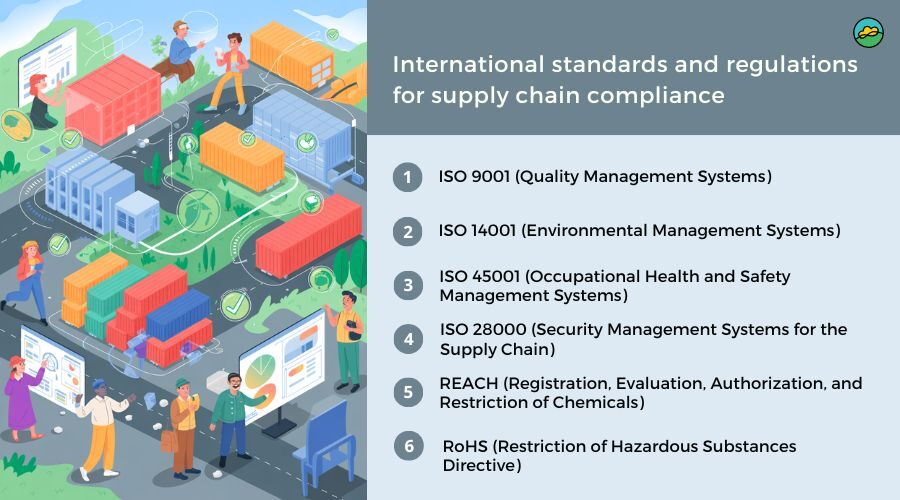
Key drivers forcing this to the top of the corporate agenda include:
– HUMAN RIGHTS AND MODERN SLAVERY LAWS: Like the UK Modern Slavery Act and the U.S. Uyghur Forced Labor Prevention Act (UFLPA).
– ENVIRONMENTAL REGULATIONS: Such as the EU’s Corporate Sustainability Due Diligence Directive (CSDDD) and various conflict mineral rules.
– DATA PRIVACY AND SECURITY: Regulations like GDPR that govern how data flows across borders with suppliers.
– TRADE SANCTIONS AND EXPORT CONTROLS: Dynamically changing lists that can instantly make a supplier relationship illegal.
According to a 2023 report by the World Economic Forum, over 50% of global GDP is moderately or highly dependent on nature and its services, exposing vast portions of supply chains to emerging environmental regulations (来源: World Economic Forum). Ignorance is no longer a valid defense.
THE HIGH COST OF NEGLECT: BEYOND FINES
Non-compliance costs are measured in more than just regulatory fines. The true expense includes operational disruption, lost revenue, and brand erosion. A single compliance failure can halt shipments at customs, trigger costly product recalls, and lead to devastating lawsuits.
Consider the automotive industry. If a car manufacturer sources a microchip from a supplier that itself sourced materials from a sanctioned entity, the entire vehicle production line could be frozen. The legal and logistical ripple effects are immense. This interconnected risk makes deep, multi-tier supply chain visibility not just ideal, but essential.
BUILDING A RESILIENT LEGAL SUPPLY CHAIN: A 5-STEP OPERATIONAL GUIDE
Transforming your approach requires a structured methodology. Here is a practical, step-by-step guide to fortify your legal supply chain.
STEP 1: CONDUCT A COMPREHENSIVE RISK ASSESSMENT
Map your entire supply network, identifying all direct (Tier 1) and critical indirect (Tier 2 & 3) suppliers. Categorize them by geographic location, commodity type, and spend. This map is your foundational blueprint.
STEP 2: ESTABLISH A ROBUST SUPPLIER DUE DILIGENCE PROTOCOL
Develop a standardized questionnaire and vetting process for all new suppliers. This must go beyond financial health to assess their labor practices, environmental policies, cybersecurity standards, and ownership structures. Third-party risk intelligence platforms can be invaluable here.
STEP 3: INTEGRATE CONTRACTUAL SAFEGUARDS
Your contracts are your first line of legal defense. Ensure they include clear clauses for compliance attestations, audit rights, data protection responsibilities, and indemnification for violations caused by the supplier. Make compliance a binding contractual obligation, not a suggestion.
STEP 4: IMPLEMENT CONTINUOUS MONITORING AND AUDITING
Due diligence is not a one-time event. Implement a system for ongoing monitoring of supplier performance and risk profile. This can involve automated news screening for sanctions, periodic self-assessment surveys, and scheduled on-site audits for high-risk partners.
STEP 5: FOSTER COLLABORATION AND TRANSPARENCY
Move from a policing mindset to a partnership model. Work with suppliers to help them understand and meet your standards. Share best practices and consider collaborative training. A transparent relationship encourages suppliers to self-report issues before they become crises.
COMMON MISCONCEPTIONS AND WARNINGS
A critical mistake many organizations make is assuming their Tier 1 suppliers have full control over their own networks. This is a dangerous illusion. Your legal liability does not stop at your direct contract. Regulations like the UFLPA explicitly hold importers accountable for conditions deep within their supply chain, often several tiers removed.
Another major pitfall is treating legal supply chain management as solely the Legal or Procurement department’s responsibility. In reality, it requires a cross-functional team involving Legal, Procurement, Operations, IT, and Compliance. Siloed efforts guarantee blind spots and failures.
TECHNOLOGY AS A FORCE MULTIPLIER: CHOOSING THE RIGHT TOOLS
Manual processes cannot scale to meet the demands of global legal supply chain management. Specialized software is essential. These platforms typically offer supplier onboarding, risk scoring, document management, and compliance tracking. Here is a comparison of two primary approaches:
| FEATURE | INTEGRATED ENTERPRISE PLATFORM (e.g., SAP Ariba, Coupa) | SPECIALIZED SUPPLY CHAIN RISK SOLUTION (e.g., Resilinc, Interos) |
|---|---|---|
| Primary Strength | Seamless integration with existing procurement and ERP workflows. Excellent for process management. | Deep, AI-driven external risk intelligence (geopolitical, financial, ESG). Superior for multi-tier mapping. |
| Risk Data Depth | Often relies on supplier-provided data. Good for structured questionnaires and audits. | Aggregates millions of data points from news, financials, satellites, and more for predictive insights. |
| Best For | Organizations seeking to streamline and digitize core procurement compliance within a familiar system. | |
| Implementation Consideration | Can be part of a larger ERP rollout. May require customization for advanced risk features. | Best-of-breed approach that may require integration with other systems but offers leading-edge risk analytics. |
In my experience consulting with multinational firms, the most successful programs often use a hybrid approach: a core enterprise platform for process execution, augmented by a specialized risk intelligence tool for external monitoring. The key is ensuring these systems can communicate.
FROM COMPLIANCE TO COMPETITIVE ADVANTAGE
A robust legal supply chain is no longer just about avoiding trouble. It is a powerful market differentiator. Consumers and B2B clients increasingly prefer to partner with ethically responsible companies. Investors are scrutinizing ESG (Environmental, Social, and Governance) performance more closely than ever.
A study by McKinsey & Company found that companies with highly resilient supply chains posted 40% higher shareholder returns during the volatile period of 2020-2022 compared to their less resilient peers (来源: McKinsey & Company). This resilience is built on legal and operational clarity. Your ability to prove ethical and compliant sourcing becomes a unique selling proposition, opening doors to new markets and premium partnerships.
THE PATH FORWARD: YOUR LEGAL SUPPLY CHAIN CHECKLIST
To operationalize the concepts in this guide, use this actionable checklist. Do not proceed without completing each item.
LEGAL SUPPLY CHAIN FOUNDATION CHECKLIST
– ASSIGN clear cross-functional ownership for the legal supply chain program.
– MAP your supply network to at least Tier 2 for critical materials.
– DEVELOP and deploy a standardized supplier code of conduct.
– REVIEW all master supplier agreements for mandatory compliance clauses.
– SELECT and implement a technology platform for due diligence and monitoring.
– ESTABLISH a routine schedule for supplier risk re-assessment.
– CREATE a playbook for incident response and supply chain disruption.
– REPORT your progress and findings transparently to senior leadership and stakeholders.
The journey to a secure legal supply chain is continuous. Regulations will evolve, new risks will emerge, and supplier relationships will change. By embedding these principles into your corporate DNA, you build not just a defensive shield, but a foundation for sustainable, trustworthy, and profitable growth. The work starts today.