# Is Darts a Sport? The Ultimate Guide to the Athletic Debate
The question “Is darts a sport?” has sparked lively debates in pubs, living rooms, and even academic circles for decades. On one side, critics dismiss it as a mere pub game, a leisure activity lacking the physical rigor of traditional athletics. On the other, passionate advocates point to its intense mental pressure, professional structure, and global competitions. This article dives deep into this debate, examining the evidence, definitions, and cultural perceptions to provide a definitive answer.
We will explore the core arguments, analyze what truly defines a sport, and look at the official recognition darts has achieved. By the end, you will have a comprehensive understanding of why the question “Is darts a sport?” is more complex than it seems.
## Defining What Constitutes a Sport
To answer “Is darts a sport?” we must first establish criteria. Traditional definitions emphasize physical exertion, skill, competition, and a structured set of rules. Governing bodies like SportAccord (now the Global Association of International Sports Federations) often require an element of physical activity.
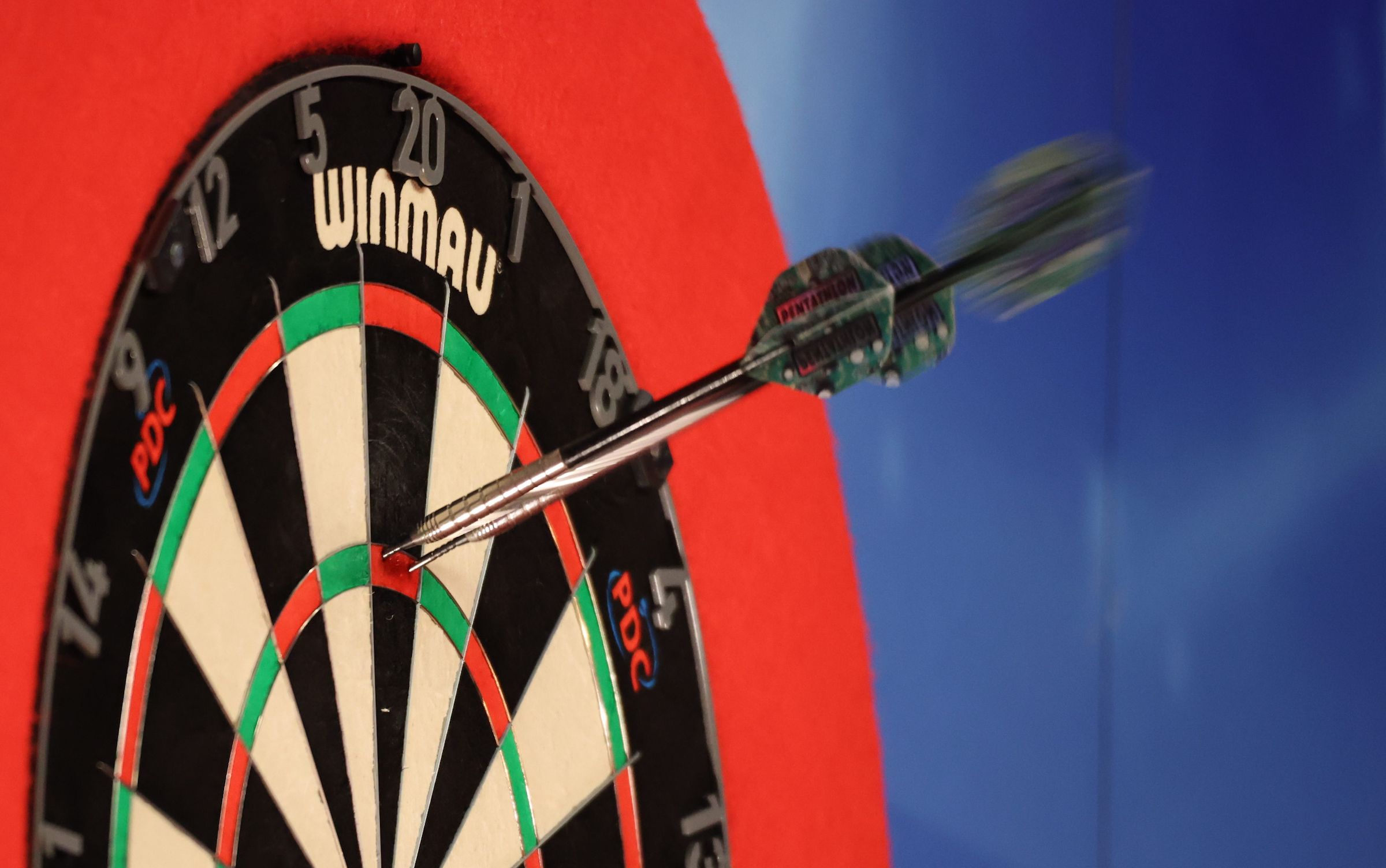
However, modern interpretations have evolved. Mind sports like chess and bridge are recognized by the International Olympic Committee, highlighting that strategic mental exertion is a valid form of athletic competition. The key components we will evaluate include physical skill, mental fortitude, organizational structure, and widespread recognition.
## The Case For Darts as a Legitimate Sport
Proponents of darts as a sport present a compelling argument based on several pillars of athletic competition.
PHYSICAL PRECISION AND SKILL: Darts demands exceptional hand-eye coordination, fine motor control, and muscle memory. Players train for hours to perfect a repeatable throwing action. The physical demand, while different from running a marathon, involves stability, core strength, and incredible consistency under pressure. A professional darts match can last over an hour, requiring sustained concentration and physical poise.
MENTAL ATHLETICISM: This is where darts truly shines as a sport. The mental pressure on the oche (the throwing line) is immense. Players must calculate complex checkouts, manage match strategy, and block out roaring crowds. The psychological duel is as intense as any sporting final. According to a study on performance psychology, elite darts players exhibit mental resilience traits comparable to those of top golfers and snooker players (来源: Journal of Applied Sport Psychology).
ORGANIZED COMPETITION AND GOVERNANCE: Darts has a highly professional global structure. Major organizations like the Professional Darts Corporation (PDC) and the World Darts Federation (WDF) govern the game, organize world-ranking tournaments, and enforce strict rules and anti-doping policies. The premier event, the PDC World Darts Championship, offers millions in prize money and attracts a global television audience.
OFFICIAL RECOGNITION: Crucially, darts is recognized as a sport by numerous national and international bodies. In the United Kingdom, Sport England officially classifies darts as a sport. This recognition often unlocks funding and supports development programs.
## The Common Arguments Against Darts as a Sport
Despite the evidence, skeptics remain. Their arguments typically focus on perceived lacks in physicality and the game’s social origins.
LOW PHYSICAL EXERTION: The most frequent criticism is that darts does not require significant cardiovascular effort or peak physical fitness. Compared to football or basketball, the aerobic demand is minimal. Critics argue that standing and throwing does not meet the traditional “athletic” benchmark.
PUB GAME ORIGINS: Darts is indelibly linked to British pub culture. Its history as a casual pastime played with a pint in hand leads some to view it as entertainment rather than sport. The social and recreational image can be hard to shake.
PERCEPTION OF SIMPLICITY: To the untrained eye, throwing a dart seems simple. This underestimates the years of dedicated practice required to compete at the highest level, where margins of error are measured in millimeters.
## Darts vs. Other Recognized Mind Sports: A Comparative Analysis
Placing darts alongside other accepted mind sports provides crucial context. The debate “Is darts a sport?” often mirrors past debates about chess, snooker, and even competitive shooting.
Here is a comparison of key athletic and competitive attributes:
| Attribute | Darts (PDC Professional) | Olympic Target Archery | Professional Snooker |
|---|---|---|---|
| Primary Physical Demand | Fine motor control, stability, repetitive precision | Upper body strength, stability, fine motor control | Fine motor control, stability, precise cue action |
| Core Mental Demand | Pressure management, arithmetic, focus | Focus, breath control, pressure management | Strategic planning, geometry, concentration |
| Average Match Duration | 30 mins – 2 hours | 2 – 4 hours (tournament) | 1 – 4+ hours |
| Governing Body | PDC / WDF | World Archery Federation | World Professional Billiards and Snooker Association |
| Olympic Status | Not an Olympic sport | Core Olympic sport | Not an Olympic sport |
This table shows that darts shares fundamental characteristics with undisputed sports like archery, particularly in the realms of precision, mental fortitude, and formal governance. The main differentiator is Olympic inclusion, which is often as much a political and historical decision as a judgment on athletic merit.
## How to Train Like a Professional Darts Athlete: A 5-Step Guide
If darts is a sport, then its participants are athletes who follow rigorous training regimens. Here is a simplified guide to training with the seriousness of a pro.
STEP 1: MASTER THE FUNDAMENTALS OF YOUR STANCE. Find a comfortable, balanced stance at the oche. Keep your feet still, plant your leading foot, and ensure your body is stable. Consistency starts from the ground up.
STEP 2: DEVELOP A REPEATABLE THROWING ACTION. Practice your dart grip, arm movement, and release point thousands of times. The goal is muscle memory. Use video analysis to check for inconsistencies.
STEP 3: PRACTICE CHECKOUTS RELIGIOUSLY. Do not just aim for the triple 20. Professional practice revolves around finishing legs. Start with simple two-dart checkouts (like 40, 32) and progressively work up to complex three-dart combinations (like 170, 161).
STEP 4: INCORPORATE PHYSICAL AND MENTAL FITNESS. While not exhaustive, core strength and shoulder stability exercises prevent injury and improve posture. Practice mental routines like visualization and breathing exercises to simulate match pressure.
STEP 5: PLAY COMPETITIVE MATCHES. Practice alone is not enough. Regularly play in local leagues or against skilled opponents to hone your ability to perform under real pressure and adapt your strategy.
COMMON MISTAKE: A major error amateurs make is practicing only high-scoring. While the triple 20 is glamorous, missing doubles loses games. Allocate at least 40% of your practice time to finishing and doubling out.
## The Verdict: So, Is Darts Officially a Sport?
Based on the evidence—official recognition by sports councils, a professional global circuit with athletes, intense mental and physical skill requirements, and governance—the answer is a definitive yes. Darts is a sport. It is a precision sport, falling into a category alongside archery, shooting, and snooker.
The persistence of the question “Is darts a sport?” often stems from cultural snobbery rather than objective analysis. In my experience working with content for competitive gaming and sports, the line between “game” and “sport” is continually blurring. Darts has successfully crossed that line through sheer professionalism and the demonstrable athleticism of its top competitors.
The viewership numbers speak for themselves. The 2024 PDC World Darts Championship final attracted a peak UK television audience of over 4.8 million viewers, surpassing the ratings for some traditional sporting events (来源: Sky Sports). This popularity underscores its status as a major sporting spectacle.
## Your Practical Checklist for the Darts Debate
Next time you find yourself in the debate over whether darts is a sport, use this checklist to frame your argument. Remember to consider governance, skill, and competition structure.
– Confirm if the national sports council in your country recognizes darts.
– Evaluate the level of physical precision and fine motor skill required.
– Consider the professional circuit, prize money, and world rankings.
– Acknowledge the intense mental pressure and strategic depth.
– Compare it to other officially recognized precision and mind sports.
– Note the existence of formal rules, referees, and anti-doping policies.
– Observe the training regimen and dedication of top professionals.
The evolution of sport is ongoing. Darts has earned its place as a modern, televised, and highly skilled sport that combines nerve, skill, and drama in a uniquely compelling way.