






# The Ultimate Guide to Radio Frequency Identification in Supply Chain Management: 5 Transformative Applications
Imagine a world where every box, pallet, and product in a vast warehouse can be located instantly. Where inventory counts happen in minutes, not days, and counterfeit goods are nearly impossible to introduce. This is not a futuristic dream. It is the reality enabled by radio frequency identification in supply chain management today.
At its core, RFID is a technology that uses electromagnetic fields to automatically identify and track tags attached to objects. Unlike traditional barcodes that require line-of-sight scanning, RFID tags can be read from a distance and through materials, broadcasting their unique identity. When integrated into supply chain management, this capability unlocks unprecedented levels of visibility, accuracy, and efficiency from the factory floor to the retail shelf.
This guide will explore how this powerful technology works, its key benefits over older systems, and five specific applications that are revolutionizing logistics. We will also provide a practical roadmap for implementation and highlight common pitfalls to avoid.
UNDERSTANDING RFID TECHNOLOGY: TAGS, READERS, AND SOFTWARE
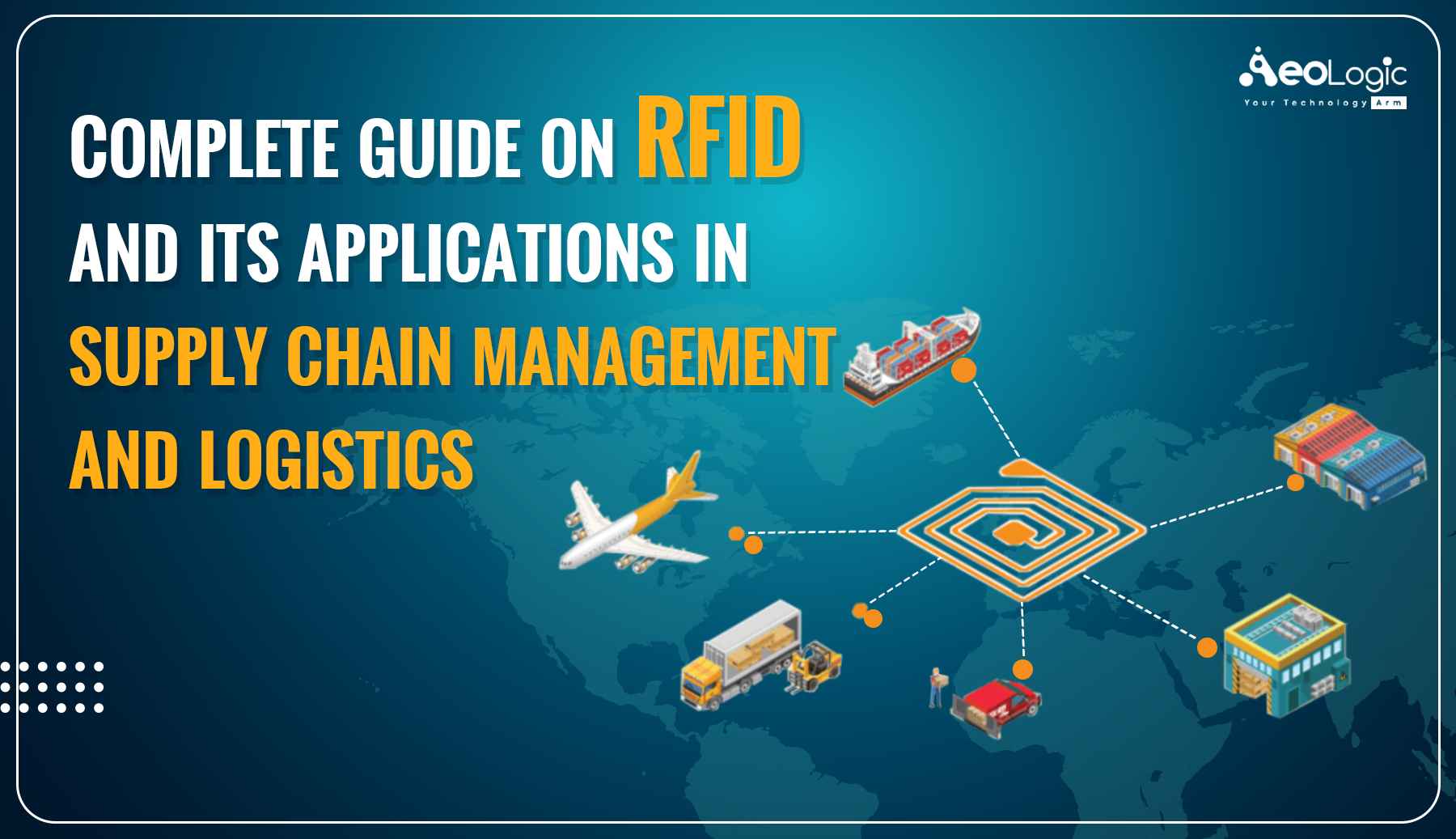
To grasp the impact of radio frequency identification in supply chain management, you must first understand its basic components. An RFID system consists of three key parts.
First, the RFID tag itself. This is a microchip attached to an antenna, enclosed in a protective material. Tags can be passive, drawing power from the reader’s signal, or active, with their own battery for longer read ranges. They store data, most commonly a unique Electronic Product Code.
Second, the RFID reader. This device emits radio waves and receives signals back from the tags. Readers can be fixed at dock doors, on forklifts, or handheld for mobile use.
Third, the software and middleware. This is the brain of the operation. It manages the readers, filters the massive influx of tag data, and integrates it with existing Warehouse Management Systems and Enterprise Resource Planning software. This integration is what transforms raw location data into actionable business intelligence.
THE COMPETITIVE EDGE: RFID VS. TRADITIONAL BARCODE SYSTEMS
Many operations still rely on barcode scanning. While effective, it has significant limitations that RFID overcomes. The table below highlights the key differences.
| FEATURE | TRADITIONAL BARCODE | RFID SYSTEM |
|---|---|---|
| READ METHOD | Requires direct line-of-sight | No line-of-sight needed; reads through materials |
| DATA CAPACITY | Limited (product type only) | High (unique item-level data) |
| READ SPEED & RANGE | Slow, one item at a time; inches away | Fast, hundreds of tags simultaneously; up to tens of meters |
| DATA READ/WRITE | Read-only | Can be read and rewritten dynamically |
| DURABILITY & REUSE | Prone to damage (dirt, tears); often disposable | More durable; many tags are reusable |
As you can see, the advantages of RFID for high-volume or complex supply chains are clear. The ability to read multiple items without manual scanning is a game-changer for efficiency.
FIVE TRANSFORMATIVE APPLICATIONS OF RFID IN THE MODERN SUPPLY CHAIN
So, how exactly is radio frequency identification in supply chain management being used? Here are five powerful applications driving real value.
1. REAL-TIME INVENTORY VISIBILITY AND ACCURACY. Gone are the days of manual cycle counts that shut down operations. With RFID readers placed at strategic points, inventory levels are updated in real-time as goods move. A study by Auburn University found that RFID can improve inventory accuracy from an average of 63% to over 95%. This eliminates stockouts and overstocking, directly improving cash flow.
2. ENHANCED WAREHOUSE AND YARD MANAGEMENT. In the warehouse, RFID streamlines receiving, put-away, picking, and shipping. Forklifts with readers can confirm they are retrieving the correct pallet automatically. In sprawling yard management, active RFID tags help locate specific trailers or containers instantly, saving hours of search time.
3. ANTI-COUNTERFEITING AND AUTHENTICATION. For industries like pharmaceuticals, luxury goods, and aerospace, RFID is a critical security tool. Each tag has a unique, encrypted identifier that is extremely difficult to replicate. This creates a secure chain of custody, allowing companies and consumers to verify a product’s origin and journey.
4. STREAMLINED LOGISTICS AND TRANSPORTATION. RFID enables smart tracking throughout the transportation leg. Tags on containers and pallets provide real-time shipment status, automate gate check-ins at distribution centers, and ensure the correct items are loaded and unloaded. This reduces delays and documentation errors.
5. PREDICTIVE MAINTENANCE AND ASSET TRACKING. Beyond tracking inventory, RFID is excellent for managing high-value reusable assets. Think of shipping containers, returnable trays, or manufacturing tools. Companies can track asset location, utilization, and even condition, enabling predictive maintenance schedules and reducing capital expenditure on replacements.
A STEP-BY-STEP GUIDE TO PILOTING RFID IN YOUR OPERATION
Implementing radio frequency identification in supply chain management can seem daunting. Based on my experience consulting with mid-sized manufacturers, a focused pilot project is the best path to success. Follow these five steps.
STEP 1: DEFINE A CLEAR, MEASURABLE OBJECTIVE. Do not start with the technology. Start with the business problem. Is it reducing out-of-stocks? Cutting labor costs in receiving? Speeding up order fulfillment? Choose one specific, high-pain area.
STEP 2: SELECT THE PILOT AREA AND ITEMS. Choose a controlled environment, like a single warehouse aisle or a specific product line. Select items that represent your challenge but are not overly complex to tag.
STEP 3: CHOOSE AND TEST HARDWARE & SOFTWARE. Work with a vendor to select appropriate tags and readers for your items and environment. Metal and liquids can interfere with certain frequencies. Conduct an on-site test to ensure reliable read rates.
STEP 4: INTEGRATE WITH YOUR BACKEND SYSTEMS. This is the most critical technical step. Ensure the RFID middleware can feed clean, filtered data into your WMS or inventory database. The value is in the integration, not the tags alone.
STEP 5: MEASURE, ANALYZE, AND SCALE. Run the pilot for a set period. Measure results against your objective from Step 1. Analyze what worked and what did not. Use these learnings to build a business case and a detailed plan for broader rollout.
COMMON PITFALLS AND HOW TO AVOID THEM
A warning for teams eager to adopt this technology: the biggest failures come from misunderstanding its nuances.
NOTE: THE “SLAP-AND-SHIP” MINDSET IS A RECIPE FOR WASTE. Simply slapping tags on products to comply with a retailer mandate without integrating the data into your own systems offers zero internal ROI. You incur cost without gaining operational benefit. Always plan for internal value capture first.
Another frequent mistake is underestimating the importance of process redesign. RFID automates data capture, but your warehouse processes must adapt to leverage that data. If workers are still following old paper-based pick lists, the speed advantage of RFID is lost. Process and technology must evolve together.
FINAL CHECKLIST FOR RFID IMPLEMENTATION SUCCESS
Before you begin your journey with radio frequency identification in supply chain management, use this checklist to ensure you are prepared.
IDENTIFY A SPECIFIC BUSINESS CASE WITH A CALCULATED ROI.
INVOLVE IT AND OPERATIONS STAFF FROM THE VERY BEGINNING.
CONDUCT A SITE SURVEY TO ASSESS RADIO FREQUENCY INTERFERENCE.
SELECT A PILOT PROJECT WITH A CONTROLLED SCOPE.
SECURE COMMITMENT FROM VENDOR PARTNERS FOR INTEGRATION SUPPORT.
PLAN FOR EMPLOYEE TRAINING AND PROCESS CHANGE MANAGEMENT.
ESTABLISH KEY PERFORMANCE INDICATORS TO MEASURE PILOT SUCCESS.
DESIGN A DATA FLOW DIAGRAM FROM TAG TO BUSINESS INTELLIGENCE DASHBOARD.
The journey to a smarter, more visible supply chain is within reach. Radio frequency identification is not just a tracking tool. It is a foundational technology for building the resilient, efficient, and data-driven logistics networks that the modern economy demands. By starting with a clear problem and a structured approach, your organization can unlock its transformative potential.
(来源: Auburn University RFID Lab)
(来源: GS1 Standards Organization)