





# The Ultimate Guide to Supermarket Supply Chain: 7 Expert Strategies for Efficiency and Resilience
The modern supermarket supply chain is a marvel of logistics, a complex dance that brings thousands of products from farms, factories, and oceans to your local store shelf. Yet, behind the scenes, it faces immense pressure: razor-thin margins, unpredictable consumer demand, and constant disruptions. Mastering this network is not just about moving goods; it is about ensuring freshness, minimizing waste, and staying profitable. This guide dives deep into the core components, challenges, and, most importantly, the actionable strategies that define a world-class supermarket supply chain.
At its heart, a supermarket supply chain encompasses all the steps and partners involved in getting a product to the consumer. It starts with sourcing raw materials, moves through manufacturing and processing, into vast distribution centers, and finally onto retail shelves. Each link must be strong. A breakdown anywhere can lead to empty shelves, spoiled food, and lost revenue. The goal is seamless integration from source to sale.
## Core Components of a Modern Grocery Supply Chain
Understanding the supermarket supply chain requires breaking it down into its fundamental parts. Each component plays a critical role.
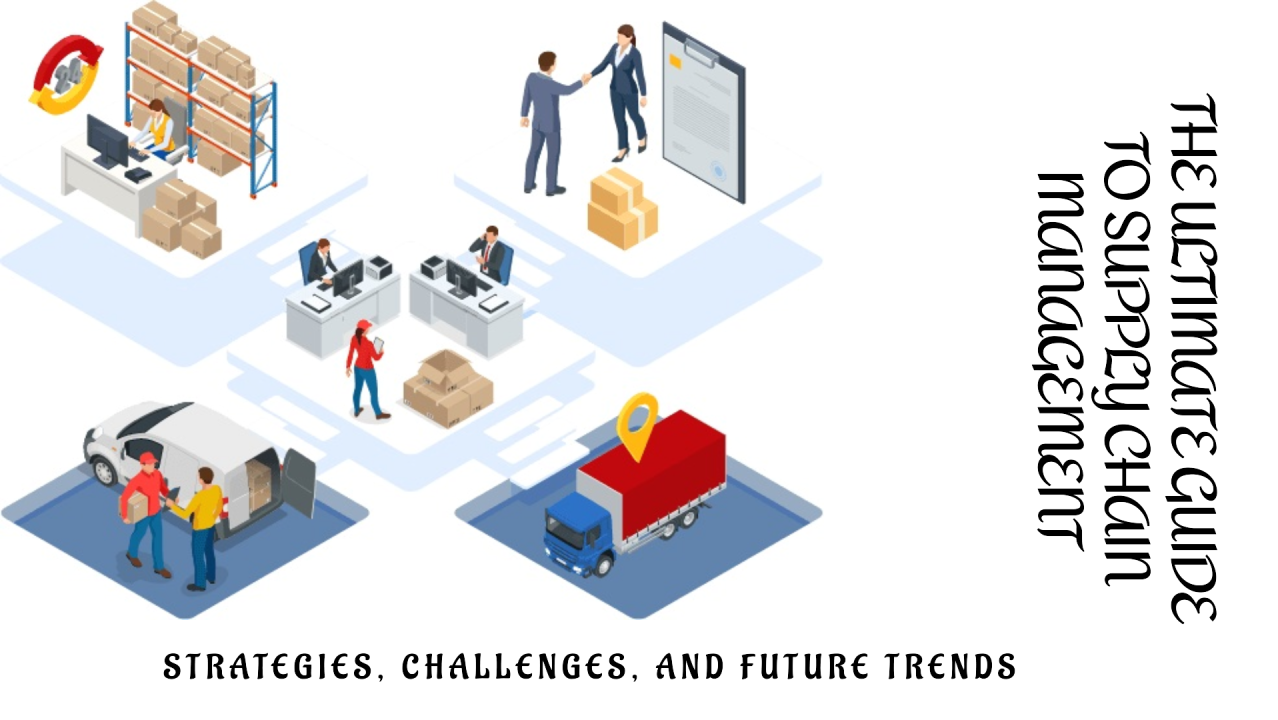
PROCUREMENT AND SOURCING: This is the starting point. Supermarkets must source high-quality products at the best prices from a global network of farmers, fisheries, and branded manufacturers. Relationships here are key.
MANUFACTURING AND PROCESSING: For private-label goods, this step is controlled directly. For others, it involves coordinating with third-party processors to transform raw materials into packaged goods.
DISTRIBUTION AND WAREHOUSING: Centralized distribution centers (DCs) are the beating heart. They receive bulk shipments, store inventory, and break them down into store-specific orders. Efficiency in these DCs is non-negotiable.
TRANSPORTATION AND LOGISTICS: A fleet of trucks, often using sophisticated route optimization software, makes the final leg from DCs to individual stores. This “last-mile” delivery is costly and complex.
RETAIL OPERATIONS AND IN-STORE LOGISTICS: Once at the store, products must be received, stored in backrooms, and placed on shelves quickly. Effective shelf management and stock rotation are crucial final steps.
## Top Challenges Facing Supermarket Supply Chains Today
Even the best systems face hurdles. The grocery industry deals with unique pressures that test supply chain resilience daily.
PERISHABILITY AND FOOD WASTE: This is the single biggest challenge. The global food supply chain is responsible for significant waste, with an estimated 14% of food lost between harvest and retail (来源: FAO). A weak supermarket supply chain directly contributes to this.
DEMAND VOLATILITY AND FORECASTING ERRORS: Consumer trends shift rapidly. A social media post can suddenly spike demand for a product, while weather changes can decimate forecasts. Predicting what will sell is incredibly difficult.
LABOR SHORTAGES AND RISING COSTS: From warehouse pickers to truck drivers, the entire logistics sector faces a labor crunch. This drives up costs and can delay operations at every stage.
FRAGMENTED TECHNOLOGY SYSTEMS: Many chains operate with legacy software that does not communicate well with newer platforms used by suppliers or logistics partners. This creates data silos and blind spots.
DISCUSSION: TRADITIONAL VS. MODERN SUPPLY CHAIN MODELS
To appreciate the evolution, it helps to compare the old way with the new data-driven approach.
| Feature | Traditional Linear Supply Chain | Modern Digital Supply Network |
|---|---|---|
| STRUCTURE | Sequential, linear steps (A to B to C). | Interconnected, web-like ecosystem. |
| DATA FLOW | Manual, delayed, often siloed. | Real-time, shared across partners. |
| FLEXIBILITY | Low; changes are slow and costly. | High; can pivot quickly to disruption. |
| FOCUS | Cost efficiency and volume. | Customer-centricity and resilience. |
| INVENTORY MANAGEMENT | Push-based (forecast-driven). | Pull-based (demand-driven). |
## A 5-Step Action Plan to Optimize Your Grocery Supply Chain
Improvement does not happen overnight. Follow this structured approach to build a more robust system.
STEP 1: CONDUCT A COMPREHENSIVE SUPPLY CHAIN AUDIT. Map your entire process from end to end. Identify every touchpoint, partner, and technology system. You cannot improve what you do not fully understand.
STEP 2: INVEST IN INTEGRATED PLANNING SOFTWARE. Implement an Advanced Planning and Scheduling (APS) or Integrated Business Planning (IBP) platform. This unifies demand forecasting, inventory planning, and replenishment into a single view.
STEP 3: FOSTER SUPPLIER COLLABORATION. Move from transactional relationships to strategic partnerships. Share forecast data and sales insights with your top suppliers to improve their planning and reliability.
STEP 4: AUTOMATE DISTRIBUTION CENTER OPERATIONS. Explore technologies like automated storage and retrieval systems (AS/RS), pick-to-light systems, and goods-to-person robotics. These reduce labor dependency and improve accuracy.
STEP 5: DEPLOY REAL-TIME VISIBILITY TOOLS. Implement Internet of Things (IoT) sensors and trackers for shipments, especially for high-value or perishable goods. Know the location and condition of your inventory at all times.
## Critical Warning: Common Supermarket Supply Chain Pitfalls
In our rush to adopt new solutions, we often stumble into avoidable traps. Here is a major one to watch for.
A common and costly mistake is focusing solely on cost-cutting at the expense of resilience. For example, switching to a single supplier for a key product line may save money initially. However, it creates a massive single point of failure. When that supplier faces a problem, your entire category can vanish from shelves. Another pitfall is neglecting data hygiene. Fancy AI forecasting tools are only as good as the historical sales data you feed them. Inconsistent or dirty data leads to garbage forecasts, no matter how advanced your software is. According to my experience consulting for regional grocers, this data foundation issue is the most frequent barrier to successful technology ROI.
## Building a Future-Proof and Agile Supply Chain
The future winners in grocery retail will operate agile, transparent, and sustainable supply chains. This means moving beyond efficiency to embrace adaptability.
Artificial intelligence is no longer optional for demand forecasting. Machine learning algorithms can analyze countless variables—weather, local events, social sentiment—to predict sales with startling accuracy. Blockchain technology, while still emerging, offers unparalleled traceability. Imagine scanning a product code to see its entire journey from farm to cart. This builds immense consumer trust. Sustainability is also shifting from a nice-to-have to a core operational requirement. Reducing food waste, optimizing truck loads to cut emissions, and sourcing ethically are now integral to long-term brand viability and cost management.
Ultimately, a superior supermarket supply chain is your greatest competitive moat. It ensures you have the right product, at the right time, in the perfect condition, and at a viable cost. The journey requires investment, collaboration, and a willingness to transform old processes. Start with a single, high-impact area, prove the value, and scale from there. The shelf is the final battlefield, and the supply chain is the arsenal that determines victory.
FINAL CHECKLIST FOR SUPPLY CHAIN EXCELLENCE:
– Complete an end-to-end mapping of all supply chain processes and partners.
– Implement a unified demand planning and forecasting software platform.
– Establish formal collaboration agreements with key strategic suppliers.
– Introduce automation in distribution centers for picking and packing.
– Deploy IoT sensors for real-time shipment location and condition monitoring.
– Develop a dual or multi-sourcing strategy for critical product categories.
– Create a clear roadmap for reducing food waste and carbon footprint.
– Regularly cleanse and audit all supply chain master data.