





# The Complete Production Chain of Chocolate: A 7-Step Journey from Bean to Bar
Have you ever wondered how the chocolate bar in your hand came to be? The production chain of chocolate is a remarkable global journey, transforming a bitter seed into a beloved treat. This process involves meticulous steps, from tropical farms to sophisticated factories. Understanding this chain reveals why quality varies so dramatically and what truly defines fine chocolate. We will explore each critical stage, the challenges involved, and how they impact your final experience.
The search for chocolate often begins with a simple craving. But the story behind it is complex. The production chain of chocolate is not a single, uniform process. It differs for mass-produced confectionery versus artisan single-origin bars. This journey affects flavor, texture, ethics, and price. By the end of this guide, you will be able to read a chocolate label and understand the immense effort encapsulated within.
## The 7 Essential Stages of Chocolate Production
The core production chain of chocolate can be broken down into seven sequential stages. Each stage is crucial. Missing or mishandling one can compromise the entire batch. The chain begins with cultivation and ends with the tempered bar you unwrap.
### 1. Cultivation and Harvesting: The Birthplace of Flavor
It all starts with the Theobroma cacao tree. These trees grow in a band roughly 20 degrees north and south of the Equator, in regions like West Africa, Latin America, and Southeast Asia. The flavor profile of the beans is intensely influenced by their terroir—the specific soil, climate, and environment. There are three main cacao varieties: Criollo (rare and aromatic), Forastero (hardy and robust), and Trinitario (a hybrid).
Workers harvest the cacao pods by hand using machetes, carefully cutting them from the tree trunks. This labor-intensive process requires skill to avoid damaging the flower buds that will produce future pods. A single tree may yield only 20-30 pods per year, and it takes approximately 400 beans to make one pound of chocolate. This stage sets the foundational potential for quality.
### 2. Fermentation: Developing the Precursors of Taste
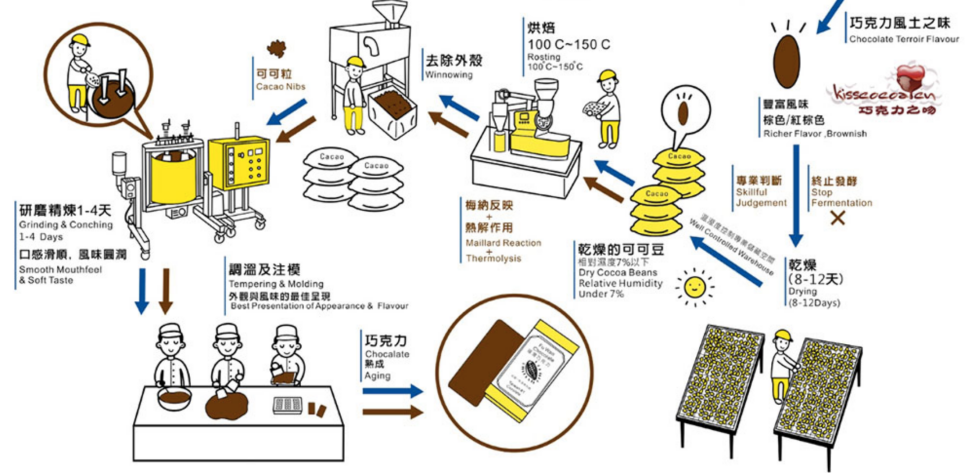
Fresh cacao beans are surrounded by a sweet, white pulp. They are not yet chocolatey. Fermentation is the first transformative step. Beans and pulp are piled into boxes, covered with banana leaves, and left for 2 to 8 days. This process generates heat, causing the beans to germinate and then die. Biochemical reactions kill the seed, reduce bitterness, and begin developing the complex flavor precursors we associate with chocolate.
Without proper fermentation, chocolate will never achieve its depth. Under-fermentation leads to weak flavor; over-fermentation can cause off-notes. According to the International Cocoa Organization, fermentation is “the single most important factor in determining the final quality of cocoa.” (来源: ICCO)
### 3. Drying: Stabilizing the Bean for Transport
After fermentation, beans have a high moisture content of about 60%. They must be dried to around 7% to prevent mold and stabilize them for shipping. This is typically done by spreading the beans on large trays or mats under the sun for several days. Workers regularly turn them for even drying.
Some large-scale operations may use mechanical dryers, but excessive heat can bake the beans, creating a harsh flavor. Slow, sun-drying is generally preferred for quality. This stage concludes at the farm level. The dried beans are then bagged and sold to traders or chocolate manufacturers, entering the global commodity market.
### 4. Roasting: Unlocking the Flavor Profile
Upon arrival at the chocolate factory, beans are cleaned and roasted. Roasting is a critical science. It further develops flavor, reduces acidity and astringency, and makes the shell brittle for easy removal. Roasting profiles—time and temperature—vary widely based on bean origin and desired end product. Light roasts preserve fruity, acidic notes, while darker roasts create deeper, richer, and more classic chocolate flavors.
This is where the chocolate maker’s artistry truly begins. As one master chocolatier explained to our team, “Roasting is like conducting an orchestra. You have all these flavor notes developed during fermentation, and your job is to bring them into perfect harmony with heat.”
### 5. Winnowing, Grinding, and Conching: Creating Chocolate Liquor
After roasting, beans are quickly cooled and then winnowed. This process cracks the beans and separates the lightweight shells from the valuable nibs. The nibs are pure cacao in small pieces.
Next, the nibs are ground between heavy stone or steel rollers. The friction and heat melt the cocoa butter within the nibs, producing a thick, non-alcoholic liquid called chocolate liquor or cocoa mass. This mass is roughly half cocoa solids and half cocoa butter.
The liquor then enters a conche—a large mixing and aerating machine. Conching can last from a few hours to several days. This process smooths the texture, drives off volatile acids, and rounds out the flavor. The longer the conching, the smoother and milder the chocolate. Here, other ingredients like sugar, milk powder (for milk chocolate), and extra cocoa butter are added.
### 6. Tempering and Molding: Achieving the Perfect Snap
Tempering is the controlled crystallization of cocoa butter. Molten chocolate is carefully cooled and reheated to specific temperatures to stabilize the cocoa butter into a specific crystalline form (Form V). This gives finished chocolate its glossy sheen, crisp snap, and stable shelf life.
Untempered chocolate will be dull, soft, and develop a whitish “bloom” (fat crystals rising to the surface). The tempered liquid chocolate is then poured into molds, vibrated to remove air bubbles, and cooled in a cooling tunnel to solidify.
### 7. Packaging and Distribution: The Final Journey
The solidified bars are demolded, wrapped, and packaged. Packaging is vital for protecting the chocolate from moisture, odors, and heat. The bars are then boxed and distributed worldwide to retailers, finally reaching consumers.
## Mass Production vs. Artisan Bean-to-Bar: A Key Comparison
Not all production chains are identical. The scale and philosophy of the maker create significant differences in process, priority, and product. The table below highlights the core distinctions.
| Stage | Mass Production Chocolate | Artisan Bean-to-Bar Chocolate |
|---|---|---|
| Bean Sourcing | Often bulk commodity beans, blended for consistency. | Often single-origin, direct-trade, or fine-flavor beans, highlighting terroir. |
| Roasting | High-temperature, shorter time for efficiency and uniform flavor. | Lower temperature, longer time, with customized profiles for each bean batch. |
| Conching | Can be very long (up to 72 hrs) for ultra-smooth, mild flavor. | Often shorter to retain more of the bean’s original character and acidity. |
| Ingredients | May include emulsifiers (like soy lecithin), vanilla flavoring, and vegetable fats. | Typically minimal ingredients: cocoa beans, sugar, sometimes cocoa butter. Rarely uses emulsifiers. |
| Primary Goal | Consistency, shelf stability, and cost-efficiency. | Expressing unique flavor notes, quality, and ethical transparency. |
## How to Taste Chocolate Like a Professional: A 5-Step Guide
Understanding the production chain enhances appreciation. Here is a simple guide to tasting chocolate mindfully.
STEP 1: LOOK. Examine the bar. It should have a glossy, even surface without blemishes or bloom.
STEP 2: LISTEN. Snap a piece. A clean, sharp snap indicates good tempering and a higher cocoa butter content.
STEP 3: SMELL. Let the piece warm in your hand, then smell it. Note the aromas: fruity, nutty, floral, or earthy?
STEP 4: TASTE. Place the piece on your tongue and let it melt slowly. Do not chew immediately. Notice how the flavor evolves from initial notes to the final aftertaste.
STEP 5: REFLECT. Consider the texture (smooth, gritty, creamy) and the length and quality of the finish.
## Common Misconceptions and Warnings in Chocolate Production
A critical warning for enthusiasts: not all “craft” chocolate is created equal. The term “bean-to-bar” is meaningful, indicating the maker controls the process from roasting onward. However, “craft” or “artisan” can sometimes be marketing terms. Always check the ingredient list. True quality chocolate rarely needs more than three or four ingredients.
Another major pitfall is assuming dark chocolate is automatically ethical. The dark side of the cocoa supply chain includes issues like deforestation and child labor. A 2020 report by the U.S. Labor Department found child labor persists in cocoa cultivation in West Africa. (来源: U.S. Department of Labor) Look for certifications like Fair Trade, Rainforest Alliance, or, better yet, brands that practice direct trade and publish their sourcing relationships.
## Your Chocolate Quality Checklist
Use this final checklist to evaluate and choose better chocolate based on your new knowledge of the production chain of chocolate.
INGREDIENTS: The list should be short. Cocoa mass, sugar, cocoa butter. Possibly vanilla or milk.
CERTIFICATION: Look for ethical sourcing certifications if this is important to you.
ORIGIN: Does it state a country or region? Single-origin offers a unique tasting experience.
PERCENTAGE: Cocoa percentage indicates total cocoa solids (mass + butter). Higher isn’t always better; balance is key.
APPEARANCE: The bar should be glossy and well-tempered.
BRAND TRANSPARENCY: Does the maker discuss their farming partners, fermentation, or roasting philosophy?
The journey from a cacao pod to a finished bar is one of the most fascinating transformations in the food world. Each link in the production chain of chocolate—from farming and fermentation to roasting and tempering—imprints itself on the final flavor. By understanding this journey, you move from a passive consumer to an informed connoisseur, capable of appreciating the skill, science, and sometimes the struggle, contained in every single piece.