





# The 7 Pillars of Leadership in Supply Chain Management: An Expert’s Guide to Building Resilience
Leadership in supply chain management is no longer just about moving goods from point A to point B. It is the critical engine for competitive advantage, risk mitigation, and customer satisfaction in a volatile world. Today’s supply chain leaders must be strategists, technologists, and diplomats all at once. This article breaks down the seven essential pillars that define modern, effective leadership in this complex field.
We will move beyond theory and into actionable strategy. You will learn how to build a resilient network, foster innovation, and lead teams through constant disruption. The goal is to provide a clear framework you can implement immediately.
## Understanding the Modern Supply Chain Leader
Gone are the days when supply chain management was a siloed, back-office function. The contemporary leader operates at the intersection of data analytics, global geopolitics, sustainability mandates, and real-time customer expectations. This role demands a unique blend of skills.
A leader in this space must interpret complex data to forecast disruptions before they happen. They must communicate a compelling vision to stakeholders from the warehouse floor to the C-suite. Perhaps most importantly, they must cultivate a culture of agility and continuous improvement within their teams. This holistic view is what separates good managers from transformative leaders in supply chain management.
## Pillar 1: Strategic Vision and Alignment
Everything begins with a clear north star. Effective leadership in supply chain management requires a vision that is tightly coupled with the overall business strategy. Is the company competing on cost, speed, or customization? The supply chain must be designed and led to support that goal.
For instance, a company focused on luxury goods will prioritize supply chain visibility and quality control over pure cost minimization. A leader must articulate this strategic link to every team member, ensuring that daily decisions—from selecting a carrier to approving a packaging change—support the broader mission. Without this alignment, efforts become fragmented and inefficient.
## Pillar 2: Mastery of Technology and Data
You cannot lead what you cannot see. Modern supply chains generate oceans of data. Leadership now requires the ability to leverage technologies like AI, IoT sensors, and advanced analytics platforms. The leader does not need to be the chief coder, but they must be technologically literate enough to ask the right questions and invest in the right tools.
Consider the power of predictive analytics. A study by McKinsey and Company found that companies using supply chain analytics extensively report a 10% or greater reduction in logistics costs and a 5% or greater increase in revenue. (来源: McKinsey & Company). A leader champions the adoption of these tools, using data-driven insights to optimize inventory, predict demand shifts, and identify supplier risks before they cause delays.
## Pillar 3: Building End-to-End Resilience
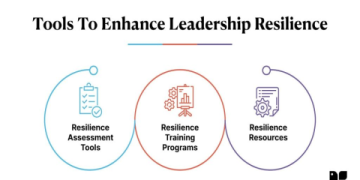
Resilience is the buzzword for a reason. It is the antidote to disruption. Leadership in supply chain management is fundamentally about designing and governing a network that can absorb shocks and recover quickly. This goes far beyond having a backup supplier.
Resilient leadership involves diversifying sourcing geographies, building in buffer capacity for critical components, and developing scenario-planning muscles within the team. It means investing in visibility tools that provide a real-time picture of the entire network, from raw material to end customer. A resilient supply chain is a strategic asset, and building it is a primary leadership responsibility.
## Pillar 4: Fostering Collaboration and Partnership
The myth of the lone-wolf leader is dead. Supply chains are ecosystems. Strong leadership is characterized by the ability to build deep, collaborative relationships—internally across departments like sales, finance, and manufacturing, and externally with suppliers and logistics partners.
This pillar moves from transactional relationships to strategic partnerships. Leaders who excel here create shared goals and open channels of communication. They understand that a supplier’s problem is ultimately their problem. In my experience, the most successful supply chain transformations occur when we break down internal silos first. When procurement, planning, and logistics teams share data and goals openly, efficiency gains of 15-20% are not uncommon.
## Pillar 5: Championing Sustainability and Ethics
The modern leader is accountable to a broader set of stakeholders. Consumers, investors, and regulators increasingly demand ethical and sustainable practices. Leadership in supply chain management now requires integrating Environmental, Social, and Governance (ESG) principles into the core of operations.
This means mapping the carbon footprint of your logistics network, ensuring fair labor practices deep within your supplier tiers, and designing for circularity. It is not just a compliance issue; it is a brand and risk issue. A 2023 report by Gartner noted that 86% of business leaders expect to increase investment in circular economy initiatives in the next two years. (来源: Gartner). Proactive leaders are already embedding these metrics into their performance dashboards.
## Pillar 6: Cultivating Talent and Agile Teams
Technology is nothing without the people who use it. A leader’s most enduring legacy is often the team they build. In a field as dynamic as supply chain, this means hiring for adaptability, curiosity, and problem-solving, not just for specific technical skills that may become obsolete.
Leadership involves continuous coaching, creating cross-training opportunities, and empowering team members to make decisions. An agile team can pivot quickly when a port shuts down or a sudden demand spike occurs. The leader’s job is to create the psychological safety and provide the tools that allow that agility to flourish.
## Pillar 7: Driving Innovation and Continuous Improvement
Complacency is the enemy. The final pillar is a relentless focus on innovation and improvement. This is not about one-off projects, but about instilling a mindset of Kaizen—continuous, incremental betterment—across the supply chain organization.
A true leader creates channels for ideas to flow from the front lines, experiments with new processes (like drone delivery in warehouses or blockchain for provenance tracking), and is not afraid to pilot and fail fast. They ask, “How can we do this better, faster, and more sustainably?” every single day.
## Traditional vs. Modern Supply Chain Leadership: A Comparative View
The shift in required leadership qualities is profound. The following table highlights the key differences.
| Leadership Aspect | Traditional Model | Modern Model |
|---|---|---|
| PRIMARY FOCUS | Cost reduction and efficiency within a linear chain. | Resilience, value creation, and agility within a dynamic network. |
| TECHNOLOGY ROLE | Technology as a support tool (ERP, basic tracking). | Technology as a strategic driver (AI, IoT, advanced analytics). |
| RELATIONSHIPS | Transactional and adversarial with suppliers. | Collaborative and partnership-based, seeking mutual gain. |
| DECISION MAKING | Reactive, based on historical data and siloed information. | Proactive and predictive, based on real-time data and cross-functional insight. |
| SUSTAINABILITY VIEW | A cost center or compliance requirement. | A core component of risk management and brand value. |
## A 5-Step Action Plan to Strengthen Your Leadership
Wondering where to start? Here is a practical, step-by-step guide to assess and enhance your leadership approach in supply chain management.
STEP 1: CONDUCT A STRATEGIC ALIGNMENT AUDIT. Gather your leadership team and map your key supply chain capabilities against the company’s top three strategic goals. Identify any gaps or misalignments.
STEP 2: ASSESS YOUR TECHNOLOGY GAP. Inventory your current analytics and visibility tools. Can you simulate a disruption scenario right now? If not, prioritize investing in a platform that provides network-wide visibility and predictive modeling.
STEP 3: MAP YOUR RISK AND RESILIENCE. Identify your single points of failure for top 20 critical components. Develop a plan to diversify or create buffer inventory for at least the top 5 within the next quarter.
STEP 4: INITIATE A COLLABORATION PILOT. Choose one key supplier or internal department (e.g., Sales & Operations Planning). Set up a joint monthly review with shared performance metrics and problem-solving agendas.
STEP 5: LAUNCH AN INNOVATION CHALLENGE. Task a cross-functional team with solving one specific, nagging problem (e.g., “Reduce packaging waste by 10% in 6 months”). Provide resources and celebrate the attempt, not just the success.
## Common Pitfall to Avoid in Your Leadership Journey
A major trap for aspiring leaders is over-optimizing for cost in isolation. Squeezing suppliers on price without considering total cost of ownership, or slashing inventory to zero without modeling disruption risk, creates a brittle supply chain. It looks efficient on a spreadsheet but will shatter under pressure. True leadership balances cost, service, resilience, and sustainability. Do not let a narrow cost KPI undermine the health of your entire network. Focus on total value, not just the lowest price.
## Your Leadership in Supply Chain Management Checklist
To cement your learning, use this actionable checklist. Review it quarterly to gauge your progress.
– I have clearly documented how our supply chain strategy supports overall business goals.
– Our team uses at least one advanced analytics tool for predictive insights, not just reporting.
– We have mapped alternative sources or contingency plans for our most critical materials.
– I hold regular, agenda-driven meetings with peers in sales, finance, and key suppliers.
– Sustainability metrics (e.g., carbon footprint, supplier code of conduct compliance) are part of our regular performance reviews.
– I have a dedicated budget and process for piloting new technologies or process innovations.
– My team members are encouraged and trained to make decisions within their scope without escalation.
Leadership in supply chain management is a journey, not a destination. By building upon these seven pillars—vision, technology, resilience, collaboration, sustainability, talent, and innovation—you transform your function from a cost center into a powerhouse of strategic value. Start with one pillar, execute your action plan, and lead your supply chain into a more resilient and competitive future.