






# The Ultimate Guide to Media Supply Chain Strategy: A 2024 Blueprint for Efficiency
In today’s hyper-competitive digital landscape, simply creating great content is not enough. The real challenge lies in delivering it efficiently, at scale, and across a fragmented global audience. This is where a robust media supply chain strategy becomes your most critical asset. It is the operational backbone that transforms creative ideas into consumable experiences, directly impacting revenue, brand consistency, and speed to market. Without a deliberate strategy, organizations face spiraling costs, workflow bottlenecks, and missed opportunities.
A media supply chain strategy is the comprehensive plan for managing the entire lifecycle of media assets—from creation and acquisition through editing, management, distribution, and analysis. It is a business-centric framework that aligns technology, processes, and people. According to a report by IBM, companies with optimized digital supply chains can achieve up to a 70% improvement in operational efficiency. For media, this translates to faster campaign launches, reduced localization costs, and deeper audience engagement.
This guide will deconstruct the modern media supply chain, provide a step-by-step implementation plan, and equip you with the tools to build a future-proof strategy.
## Understanding the Modern Media Supply Chain Ecosystem
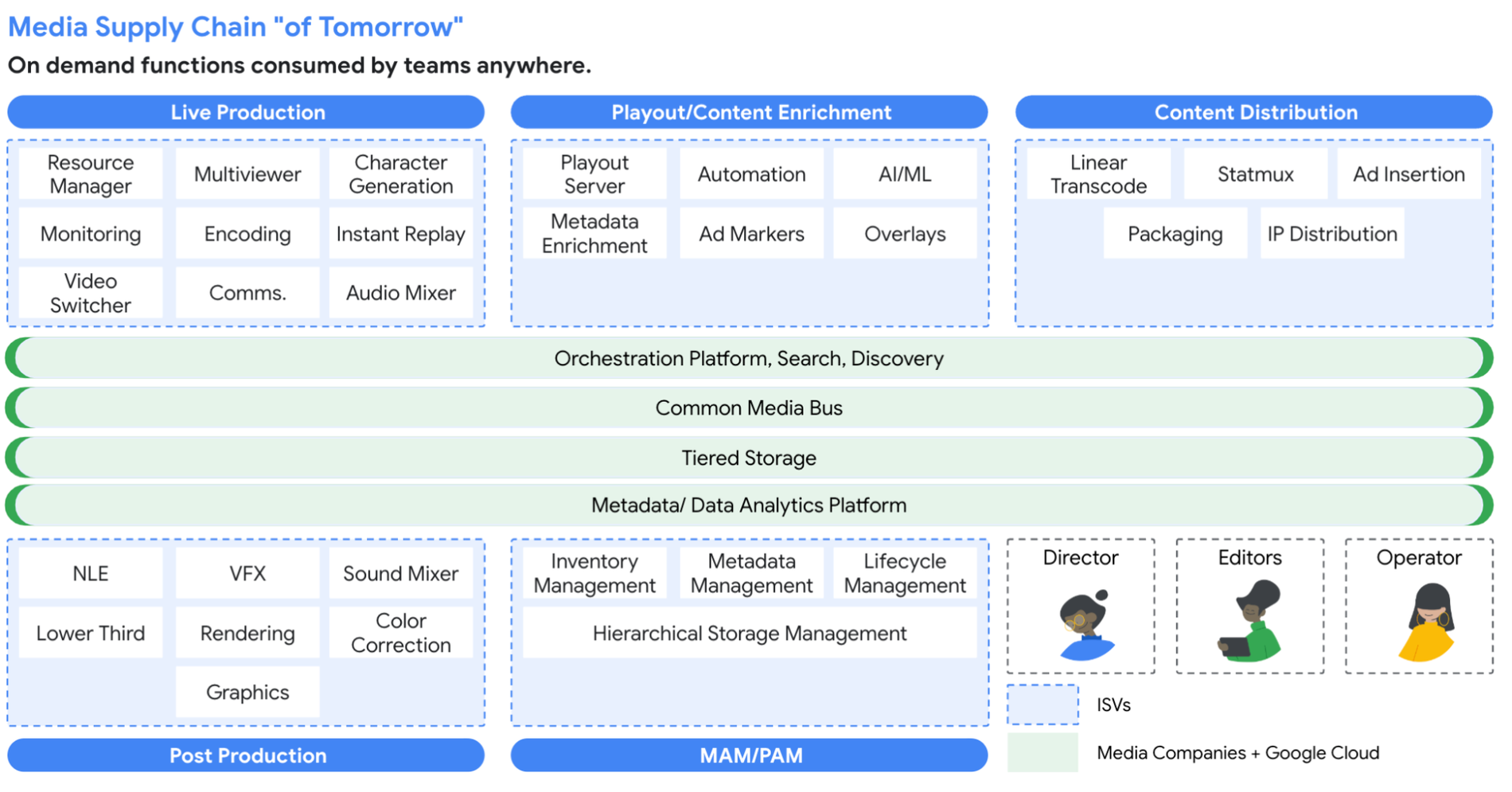
Gone are the days of linear tape-based workflows. The modern media supply chain is a dynamic, interconnected ecosystem. At its core, it manages the flow of digital assets—video files, images, audio, graphics, and metadata. Key components include:
INGEST AND CREATION: This is the starting point, involving raw footage from shoots, computer-generated imagery, audio recordings, and graphic design files. Quality and standardization here set the stage for everything that follows.
PRODUCTION AND POST-PRODUCTION: Here, assets are edited, color-graded, mixed, and assembled into final products. Collaboration tools and version control are essential in this phase to maintain creative intent.
ASSET MANAGEMENT AND STORAGE: A centralized Media Asset Management (MAM) system acts as the single source of truth. It catalogs, stores, and retrieves assets using rich metadata, making them discoverable and reusable.
PROCESSING AND TRANSFORMATION: Assets must be packaged for various endpoints. This involves transcoding (changing file formats), encoding (compressing for streaming), creating clips, adding subtitles, and applying region-specific edits.
DISTRIBUTION AND PUBLICATION: The final step involves delivering content to broadcasters, streaming platforms (like Netflix, Hulu, YouTube), social media channels, and owned websites. This requires robust delivery networks and platform-specific integrations.
ANALYTICS AND OPTIMIZATION: The loop closes with data. Analyzing performance metrics—viewership, engagement, geographic data—informs future content creation and supply chain adjustments.
## Why a Strategic Approach is Non-Negotiable
A tactical, tool-by-tool approach leads to silos and inefficiency. A strategic media supply chain strategy provides a unified vision. The benefits are tangible:
COST REDUCTION: Automating manual tasks like file transcoding or metadata tagging significantly lowers operational expenses. It also minimizes costly rework due to lost or incorrect assets.
ACCELERATED TIME-TO-MARKET: Streamlined workflows allow you to publish content faster, capitalizing on trends and beating competitors. A study by the Content Marketing Institute found that organizations with a documented content strategy are 414% more likely to report success, largely due to efficient processes.
ENHANCED BRAND CONSISTENCY: When all teams access the same approved assets from a central library, brand messaging and visual identity remain consistent across all touchpoints.
SCALABILITY AND FLEXIBILITY: A well-architected strategy allows you to scale operations up or down effortlessly and adapt to new formats, platforms, or business models (like direct-to-consumer streaming).
IMPROVED RIGHTS AND COMPLIANCE: Tracking licensing rights, usage restrictions, and ensuring content complies with regional regulations (like GDPR or accessibility standards) becomes systematic.
## Core Pillars of a Future-Proof Media Supply Chain Strategy
Building a resilient strategy rests on four interconnected pillars.
CLOUD-NATIVE ARCHITECTURE: The cloud is no longer an option; it is the foundation. It offers unlimited scalability, global collaboration capabilities, and a shift from capital expenditure (buying hardware) to operational expenditure (paying for services). Platforms like AWS Elemental, Google Cloud’s Video AI, and Microsoft Azure Media Services provide specialized building blocks.
ARTIFICIAL INTELLIGENCE AND AUTOMATION: AI is a game-changer. It automates labor-intensive tasks such as:
– Logging and tagging content using speech-to-text and computer vision.
– Creating automatic clip highlights and trailers.
– Quality control (QC) by detecting audio errors or visual glitches.
– Personalizing content recommendations and dynamic ad insertion.
UNIVERSAL METADATA FRAMEWORK: Metadata is the DNA of your assets. A unified schema—using standards like SMPTE ST 2110 or custom taxonomies—ensures every asset is described consistently. This is what makes assets searchable, automatable, and monetizable. Think of it as the glue that holds the entire chain together.
API-FIRST INTEGRATION: Best-of-breed tools should work together seamlessly. An API-first approach ensures your MAM, editing software, transcoding engines, and distribution platforms can communicate data effortlessly, creating a cohesive technology stack rather than a collection of disconnected point solutions.
## Choosing Your Technology Stack: A Comparative Analysis
Selecting the right tools is critical. The choice often comes down to comprehensive enterprise suites versus agile, best-of-breed solutions. Here is a comparison to guide your decision:
| Feature / Consideration | Enterprise Media Suite (e.g., Adobe Experience Manager, IBM Watson Media) | Best-of-Breed Integrated Stack (e.g., Iconik + Mimir + Telestream) |
|---|---|---|
| DEPLOYMENT AND COST | Often higher upfront cost and longer implementation. Licensing can be complex. | Typically cloud-native SaaS models with more flexible, modular pricing. |
| INTEGRATION | Tightly integrated modules within the suite. May have challenges connecting to external tools. | Relies on APIs for integration. Offers greater flexibility but requires more initial setup. |
| CUSTOMIZATION AND FLEXIBILITY | Can be less flexible. You adapt your process to the suite’s workflow. | Highly customizable. You build a workflow that matches your exact needs. |
| INNOVATION SPEED | Updates and new features follow the vendor’s release cycle. | Can adopt innovative point solutions faster by swapping components. |
| BEST FOR | Large organizations needing a single-vendor solution for governance and broad, standardized workflows. | Agile teams, content creators, and businesses with unique workflows seeking cutting-edge capabilities. |
## A 5-Step Blueprint for Implementing Your Strategy
Developing your media supply chain strategy is a project. Follow this actionable blueprint.
STEP 1: CONDUCT A CURRENT-STATE AUDIT
Map your entire existing workflow from end to end. Identify every touchpoint, manual process, and bottleneck. Catalog all tools in use and interview stakeholders from creative, operations, and distribution teams to understand pain points.
STEP 2: DEFINE STRATEGIC GOALS AND KPIS
Align your strategy with business objectives. Are you aiming to reduce production costs by 20%? Increase content output by 50%? Launch in three new territories next year? Define clear Key Performance Indicators (KPIs) like cost per asset, time from ingest to publish, or asset reuse rate.
STEP 3: DESIGN THE FUTURE-STATE WORKFLOW
Based on your audit and goals, design the ideal workflow. Identify where automation can replace manual steps, where approvals can be streamlined, and how metadata will flow between systems. Create clear process diagrams.
STEP 4: SELECT AND INTEGRATE TECHNOLOGY
Using frameworks like the comparison table above, evaluate and select your core technology pillars: MAM, production tools, processing engines, and analytics. Prioritize solutions with strong APIs and proven interoperability. Start with a pilot project for a specific content type or channel.
STEP 5: GOVERN, TRAIN, AND ITERATE
Establish governance rules for metadata, file naming, and storage. Invest heavily in training for all users. A tool is only as good as the people using it. Finally, treat your strategy as a living document. Regularly review KPIs, gather feedback, and adapt to new technologies and market demands.
## Common Pitfalls and How to Avoid Them
WARNING: AVOIDING THESE STRATEGY KILLERS
Even with the best plan, execution can falter. Be acutely aware of these common mistakes:
IGNORING METADATA FROM DAY ONE: Treating metadata as an afterthought is the single biggest error. Poor metadata cripples searchability and automation. Define your schema during the design phase, not after implementation.
BUYING TOOLS BEFORE DEFINING PROCESS: Do not let a shiny new tool dictate your workflow. First, define your ideal process based on business goals, then find the tools that enable it. Technology should be an enabler, not a driver.
NEGLECTING CHANGE MANAGEMENT: A new media supply chain strategy changes how people work. Without proper communication, training, and highlighting benefits, you will face resistance and low adoption. Lead with the “why.”
UNDERESTIMATING THE NEED FOR DEDICATED OWNERSHIP: This strategy is not an IT project or a part-time task for a producer. It requires a dedicated owner or cross-functional team with the authority to drive change and manage the ecosystem long-term.
## Your Media Supply Chain Strategy Checklist
Before you embark on building or refining your strategy, use this checklist to ensure you have covered the essentials.
– Conducted a complete end-to-end audit of current workflows and pain points.
– Defined clear business objectives and measurable KPIs for the strategy.
– Designed a future-state workflow diagram with automation and efficiency gains.
– Established a universal metadata schema and taxonomy for all assets.
– Prioritized a cloud-native, API-first approach for technology selection.
– Secured executive sponsorship and budget for the initiative.
– Created a change management and comprehensive training plan for all users.
– Identified a dedicated owner or team to govern the strategy long-term.
– Planned a pilot project to test the new workflow on a limited scale.
– Scheduled regular review cycles to assess KPIs and iterate on the strategy.
In my experience consulting with media teams, the most successful transformations start with a shift in mindset. It is not about finding a quicker way to transcode a file. It is about viewing your content as a dynamic, data-rich asset that flows through a intelligent operational system. By implementing a deliberate media supply chain strategy, you unlock not just efficiency, but creativity and growth. The investment you make today in building this resilient backbone will define your competitive edge for years to come.