





# The Ultimate Guide to the Digital Content Supply Chain: 5 Steps to Streamline Your Workflow
Imagine you are a magazine publisher. The old way involved writers, editors, printers, trucks, and newsstands. Today, that entire process is digital. The articles, images, and videos you consume online follow a similar, invisible path from creation to your screen. This path is called the digital content supply chain.
In simple terms, a digital content supply chain is the end-to-end process for creating, managing, delivering, and analyzing digital content. It maps the journey of a piece of content from its initial idea through production, approval, distribution, and performance measurement. For modern businesses, this is not just a workflow. It is the central nervous system of marketing, communication, and customer engagement.
A staggering 60% of marketers report that creating content consistently is their biggest challenge (来源: Semrush). A broken or inefficient digital content supply chain is often the culprit. It leads to missed deadlines, inconsistent branding, and wasted resources. This guide will break down this critical concept, provide a clear roadmap for optimization, and show you how to build a resilient system.
## What Exactly Is a Digital Content Supply Chain?
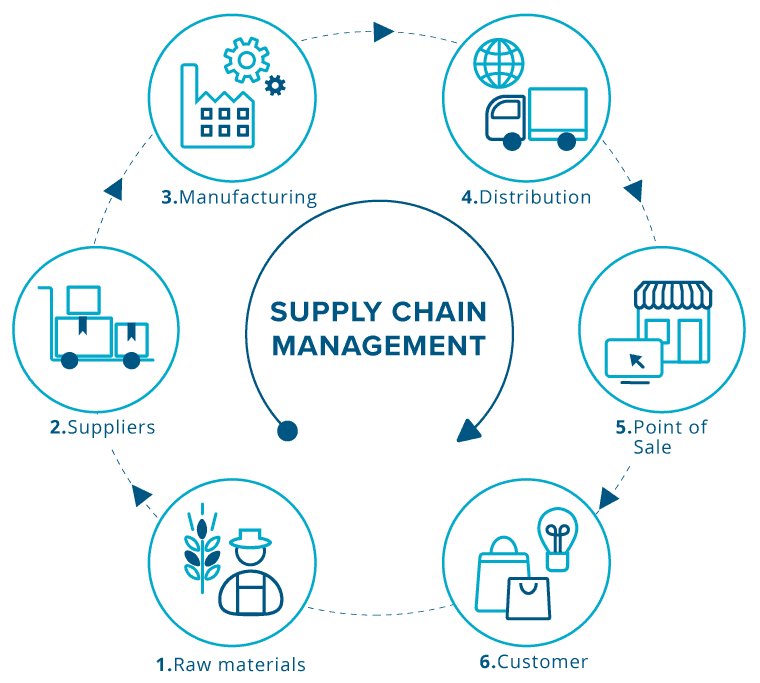
Think beyond a simple content calendar. The digital content supply chain is a holistic framework. It connects every person, tool, and process involved in your content operations. The goal is to move content efficiently, maintain quality, and ensure it reaches the right audience on the right platform at the right time.
The core phases of a typical digital content supply chain are:
1. STRATEGY AND PLANNING: This is the foundation. It involves audience research, keyword planning, topic ideation, and aligning content with business goals.
2. CREATION AND PRODUCTION: Here, writers, designers, and videographers develop the assets. This phase includes drafting, designing, recording, and editing.
3. WORKFLOW AND APPROVAL: Content moves through reviews, edits, legal checks, and final approvals. This stage often causes the most bottlenecks.
4. PUBLICATION AND DISTRIBUTION: Approved content is published on owned channels (like your website or blog) and shared across earned and paid channels (social media, email, ads).
5. STORAGE AND MANAGEMENT: This involves organizing assets in a central repository like a Digital Asset Management (DAM) system for easy retrieval and repurposing.
6. MEASUREMENT AND OPTIMIZATION: Finally, you analyze performance data (engagement, conversions) to learn what works and feed insights back into the strategy phase.
## Why Optimizing Your Content Supply Chain Is Non-Negotiable
An unmanaged content workflow is costly. Teams waste time searching for files, chasing approvals, and fixing inconsistent formatting. The brand message becomes fragmented. More critically, you lose agility. You cannot quickly capitalize on trends or respond to market changes.
Optimizing your digital content supply chain directly impacts your bottom line. It leads to:
– FASTER TIME-TO-MARKET: Streamlined processes mean you can publish quality content faster than competitors.
– CONSISTENT BRAND EXPERIENCE: Centralized guidelines and assets ensure every piece of content, from a tweet to a whitepaper, feels cohesive.
– IMPROVED TEAM EFFICIENCY: Clear roles and automated workflows reduce friction and free up creative energy.
– DATA-DRIVEN DECISIONS: A closed-loop system connects content performance to creation, allowing for continuous improvement.
– BETTER ROI ON CONTENT: By repurposing assets and eliminating waste, you maximize the value of every piece you create.
In my experience consulting with marketing teams, the single biggest leap in productivity comes from implementing a formalized content operations model. One client reduced their content approval time by 70% simply by mapping their supply chain and identifying a single redundant approval step.
## Core Components and Technology Stack
A robust digital content supply chain is powered by a integrated stack of tools. These are not just random apps. They are the specialized machinery for each stage of the process.
Here is a comparison of two critical components: Content Management Systems (CMS) and Digital Asset Management (DAM) systems.
| Feature / Purpose | Content Management System (CMS) | Digital Asset Management (DAM) |
|---|---|---|
| PRIMARY FUNCTION | To create, manage, and publish written content (e.g., blog posts, web pages) to a website. | To store, organize, retrieve, and distribute rich media assets (e.g., images, videos, logos, PDFs). |
| CORE ASSETS | Text, basic HTML, metadata. | High-resolution images, video files, audio files, brand templates, presentations. |
| KEY USERS | Content writers, editors, web managers. | Designers, videographers, brand managers, marketing teams. |
| TYPICAL INTEGRATION | Connects to analytics, SEO tools, and email platforms. | Connects to CMS, social scheduling tools, and creative software like Adobe Creative Cloud. |
Beyond these, your stack should also consider workflow tools (like Trello or Asana), collaboration platforms (like Google Workspace), content planning software, and comprehensive analytics platforms.
## A 5-Step Guide to Mapping and Optimizing Your Supply Chain
You cannot fix what you cannot see. Follow this actionable guide to audit and improve your own digital content supply chain.
STEP 1: DOCUMENT YOUR CURRENT STATE.
Gather your team and whiteboard every single step a typical piece of content takes. Start with “idea generated” and end with “performance report reviewed.” Include every person who touches it and every tool used. You will likely discover surprising complexities and redundancies.
STEP 2: IDENTIFY BOTTLENECKS AND PAIN POINTS.
Ask tough questions. Where do pieces get stuck? Is it waiting for legal approval? Are designers constantly re-making logos because no one can find the right file? A study by Kapost found that marketers spend nearly 20% of their workweek just on redundant tasks (来源: Kapost). Pinpoint these time sinks.
STEP 3: DEFINE ROLES AND STANDARDIZE PROCESSES.
For each stage in your documented chain, assign a clear owner and define their responsibilities. Create simple, templated workflows for different content types (e.g., a blog post workflow vs. a social media video workflow). Establish brand guidelines and content standards everyone must follow.
STEP 4: SELECT AND INTEGrate KEY TOOLS.
Based on your gaps, choose tools that solve specific problems. Do not get the most expensive DAM if your main issue is editorial calendaring. Prioritize tools that integrate well with each other to avoid data silos. The goal is to create a seamless technology ecosystem.
STEP 5: IMPLEMENT, MEASURE, AND ITERATE.
Roll out your new process in phases. Train your team thoroughly. Then, establish KPIs to measure success, such as “reduction in days from brief to publish” or “increase in asset reuse rate.” Review these metrics regularly and be prepared to tweak your system.
COMMON MISTAKE TO AVOID
A major pitfall is focusing only on the creation and publication phases while neglecting the “back end” of the chain. If you do not have a system for organizing and retrieving old content, you are constantly reinventing the wheel. Similarly, skipping the analysis phase means you are creating content in the dark, without learning from what resonates with your audience. A true digital content supply chain is a loop, not a straight line.
## The Future: AI and Automation in the Content Chain
The digital content supply chain is becoming increasingly intelligent. Artificial intelligence is no longer a futuristic concept. It is actively reshaping each stage.
AI tools can now assist with topic research and even initial content drafting. They can automatically tag and categorize assets in a DAM based on visual content. Workflow automation can route tasks and send reminders without human intervention. Perhaps most powerfully, AI-driven analytics can predict content performance and suggest optimal distribution channels.
This does not replace human creativity and strategy. Instead, it automates the repetitive, administrative tasks that clog the chain. The result? Teams can focus on high-level strategy, creative storytelling, and building genuine audience connections. The future belongs to those who leverage technology to enhance, not replace, their human-powered digital content supply chain.
## Your Digital Content Supply Chain Optimization Checklist
Use this list to audit and improve your process. A mature digital content supply chain should have most of these elements in place.
– A documented, visual map of your entire content workflow exists.
– Clear roles and responsibilities (RACI) are defined for each workflow stage.
– A central, accessible repository for all brand assets and guidelines is live.
– Content planning is tied to audience insights and keyword strategy.
– Standardized templates and briefs exist for major content types.
– A defined approval workflow with a maximum of 2-3 stakeholders is enforced.
– A content calendar that is visible and actionable for the entire team is used.
– Published content is systematically organized for easy search and repurposing.
– Performance metrics are tracked and reviewed in regular team meetings.
– Insights from analytics are formally fed back into the planning stage.
Building a seamless digital content supply chain is an investment in your company’s operational excellence. It transforms content from a chaotic, reactive effort into a scalable, strategic advantage. Start by mapping your current state. Identify just one bottleneck to eliminate this quarter. The cumulative effect of these improvements will be a faster, more agile, and more effective content engine that drives real business growth.