






# How Goods and Services Are Distributed in a Market Economy: The Ultimate Guide to the Invisible Hand
Have you ever wondered how the smartphone in your pocket, the coffee in your cup, and the car on your street all find their way to you? No central committee decides who gets what. Instead, a complex, decentralized system coordinates billions of decisions daily. This system is the market economy, and understanding how goods and services are distributed within it is key to grasping modern society.
In a market economy, goods and services are distributed primarily through the price mechanism. Prices act as signals, communicating information about scarcity, value, and consumer desire. When demand for an item rises, its price typically increases. This higher price incentivizes producers to make more of it, while simultaneously encouraging some consumers to buy less. The opposite happens when demand falls. This continuous feedback loop between buyers and sellers determines what is produced, in what quantity, and for whom. The distribution is not based on need or equality, but on the willingness and ability to pay.
This article will serve as your definitive guide. We will explore the core mechanisms, the role of key players, and the surprising efficiency of this process. By the end, you will have a clear, actionable understanding of how distribution works in a free market system.
## The Core Mechanism: Price as the Ultimate Signal
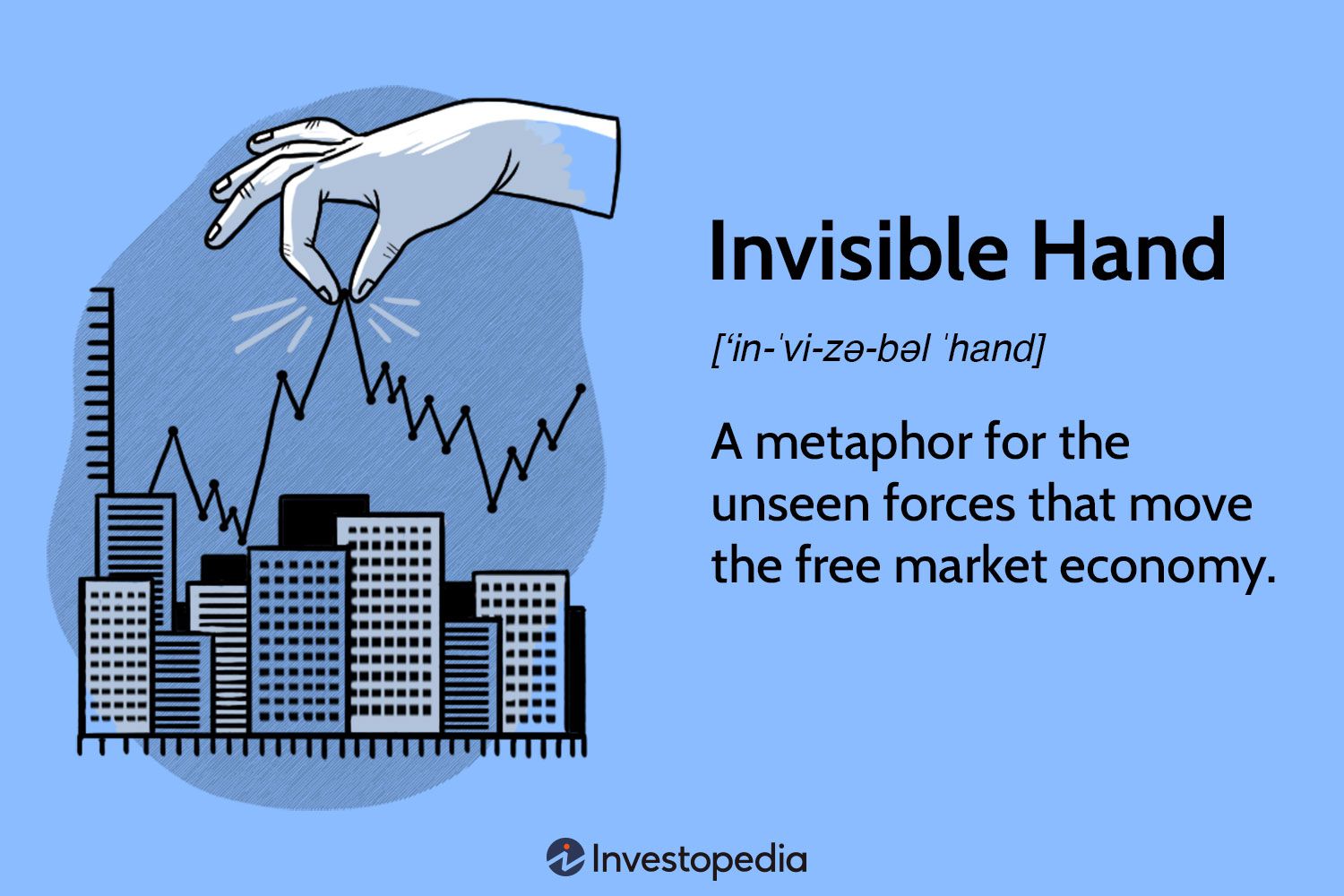
The distribution of goods and services in a market economy hinges on one powerful tool: price. Think of price as a language. It conveys a massive amount of information instantly.
When a drought reduces the coffee harvest, suppliers immediately face a scarcity. They raise prices. This price increase does two things. First, it tells consumers, “This product is now more scarce, use it wisely.” Some consumers will switch to tea. Second, the higher price tells other potential producers, “There is profit to be made here if you can grow coffee elsewhere or find a substitute.” This dynamic adjustment happens continuously and without a central planner.
The price mechanism solves what economists call the “calculation problem.” In a complex economy with millions of products and billions of preferences, no single entity can possibly know everything needed to allocate resources efficiently. Prices aggregate this dispersed knowledge. They answer the fundamental economic questions: What to produce? How to produce it? And for whom to produce it? The answer to that last question, “for whom,” is precisely how goods and services are distributed in a market economy—to those who value them enough to pay the market price.
## Key Players in the Distribution Network
Distribution is not a passive event. It is driven by the interactions of two primary groups: households and firms.
Households are the consuming units. They own the factors of production—primarily their labor—which they sell to firms in exchange for income (wages, salaries). They then use this income to express their demand for goods and services in the marketplace. Their purchasing decisions, in aggregate, create the demand signals that guide the entire economy.
Firms are the producing units. They hire factors of production from households to create goods and services. Their goal is to profit by satisfying consumer demand. They compete with each other to offer better products at lower prices. This competition is the engine of innovation and efficiency. A firm that fails to distribute what consumers want at a price they are willing to pay will not survive.
The circular flow between these two groups—income from firms to households, and expenditure from households to firms—is the bloodstream of the market economy. The distribution of goods and services is the outcome of this continuous circulation.
## Market Structures and Their Impact on Distribution
Not all markets are the same. The structure of a market significantly influences how goods and services are distributed within it. The level of competition is the key differentiator.
In a perfectly competitive market, with many small firms selling identical products, distribution is highly efficient. Prices are driven down to the cost of production, and goods flow to anyone willing to pay that low price. However, most real-world markets are imperfect.
Monopolistic competition, like the restaurant or clothing industry, features many firms selling differentiated products. Here, distribution is influenced by branding and perceived value alongside price.
An oligopoly, such as the cellular service or airline industry, has a few large firms. Their pricing and output decisions can significantly impact distribution, sometimes leading to higher prices and less choice than in a more competitive setting.
A monopoly, with a single supplier, has complete control over the distribution of its product. Without competition, it can restrict output and raise prices, distributing goods primarily to those who can afford the premium.
The following table contrasts how distribution functions under two primary market structures:
| Market Feature | Perfect Competition | Monopoly |
|---|---|---|
| Number of Firms | Many | One |
| Price Control | None (Price Taker) | Significant (Price Maker) |
| Output Level | High (At equilibrium) | Restricted (To maximize profit) |
| Efficiency of Distribution | Allocatively Efficient | Inefficient (Deadweight Loss) |
| Primary Distribution Mechanism | Price equals marginal cost; goods go to all willing buyers at the lowest sustainable price. | Price is set above marginal cost; goods are distributed only to buyers willing to pay the inflated price. |
## The Role of Government: Regulation and Redistribution
While the market is powerful, it is not perfect. Governments intervene to correct what economists call “market failures” and to address equity concerns. This intervention directly alters how goods and services are distributed in a market economy.
Governments enforce property rights and contracts, the essential legal framework that allows markets to function. They also address externalities, like pollution, through taxes or regulations, ensuring the distribution of costs and benefits is more accurate.
Furthermore, societies often decide that distribution based solely on willingness to pay leads to unacceptable inequality. Through progressive taxation and social welfare programs (like unemployment benefits, food assistance, or public healthcare), governments redistribute income and provide a social safety net. This means the final distribution of goods and services is a mix of market outcomes and government policy. According to the OECD, in 2021, government social spending averaged about 20% of GDP across member countries, illustrating the scale of this redistribution (来源: OECD Social Expenditure Database).
## A 5-Step Guide to Analyzing Any Market Distribution
You can apply this framework to understand any market. Here is a simple five-step guide.
STEP 1: IDENTIFY THE PRODUCT AND MARKET. Clearly define the good or service and the geographic or demographic boundaries of its market. Is it the market for electric vehicles in Europe, or for haircuts in a small town?
STEP 2: ANALYZE THE PLAYERS. Who are the major buyers (demand side) and sellers (supply side)? Are there many small firms or a few dominant ones? What is the relative power of each group?
STEP 3: DECODE THE PRICE SIGNALS. What is the current price trend? Is it rising, falling, or stable? Investigate the factors behind this: changes in input costs, consumer preferences, technology, or regulations.
STEP 4: EVALUATE THE DISTRIBUTION OUTCOME. Based on price and market structure, who is actually getting the product? Is it widely available to different income groups, or is it concentrated? Are there significant barriers to access?
STEP 5: CONSIDER EXTERNAL FORCES. What is the role of government? Are there taxes, subsidies, or quotas affecting this market? Are there significant positive or negative externalities being created?
COMMON MISCONCEPTION: A frequent error is to assume that in a market economy, goods and services are distributed randomly or based on luck. This is false. The distribution is systematic, though not necessarily equitable. It is based on a logic of voluntary exchange, property rights, and price-mediated signals. Another mistake is conflating “free market” with “unregulated.” All successful market economies operate within a framework of rules.
## The Invisible Hand in Action: A Real-World Perspective
From my experience analyzing economic systems, the most fascinating aspect is observing the “invisible hand” solve problems no planner could. Consider the global supply chain for consumer electronics. No single entity coordinates the mining of rare earth minerals in one country, the chip fabrication in another, and the assembly in a third, all to deliver a specific model of laptop to a store near you. Millions of independent contracts, price signals, and profit motives align to make it happen with astonishing reliability.
This coordination extends to innovation. The distribution of cutting-edge services like gene sequencing or AI software follows market principles. High initial costs mean early distribution is to research institutions and wealthy corporations. But as competition increases and processes improve, prices fall dramatically. The cost of sequencing a human genome has plummeted from nearly $100 million in 2001 to about $600 today (来源: National Human Genome Research Institute). This price collapse fundamentally changed how this service is distributed, making it accessible for medical diagnostics and personal curiosity.
## Final Checklist for Understanding Market Distribution
To solidify your knowledge of how goods and services are distributed in a market economy, use this practical checklist. Review each point and ensure you can explain it.
UNDERSTAND that distribution is driven by price, not by a central authority.
RECOGNIZE that price acts as a signal for scarcity and value, coordinating billions of decisions.
IDENTIFY the two key groups: households (demand and labor supply) and firms (supply and job creation).
DIFFERENTIATE between market structures like competition, oligopoly, and monopoly, and know how each affects distribution.
ACKNOWLEDGE the role of government in correcting market failures and altering distribution through taxation and welfare.
ANALYZE real-world markets using the five-step framework of product, players, price, outcome, and external forces.
APPRECIATE the dynamic nature of the process, where innovation and competition constantly reshape what is available and to whom.
The way goods and services are distributed in a market economy is a testament to decentralized human cooperation. It is a complex, imperfect, yet incredibly resilient system that has lifted billions out of poverty by harnessing individual initiative and local knowledge. By understanding its mechanisms, we can better participate in it, improve its outcomes, and appreciate the quiet miracle of the marketplace that delivers our daily needs.