





# The Ultimate Guide to Leather and Goods: From Selection to Care for a Lifetime
Leather and goods represent more than just products. They are a fusion of tradition, craftsmanship, and enduring style. Whether it is a timeless handbag, a rugged pair of boots, or a sleek wallet, leather items carry a story. However, navigating the world of leather can be confusing. With so many types, grades, and care instructions, how do you ensure you are investing in quality that lasts? This comprehensive guide demystifies leather and goods, providing you with the knowledge to make informed purchases and preserve your investments for decades.
UNDERSTANDING THE LEATHER LANDSCAPE: TYPES AND TERMS
Not all leather is created equal. The first step in appreciating leather goods is understanding the material itself. Leather is primarily categorized by its layer within the animal hide and the finishing process.
Full-grain leather is the highest quality. It comes from the top layer of the hide and retains the natural grain, including unique markings and imperfections. It is incredibly durable and develops a beautiful patina over time. Top-grain leather is slightly sanded to remove surface imperfections, making it more uniform but slightly less robust than full-grain. Genuine leather is a misleading term. It technically means real leather, but it often refers to lower-quality layers that have been heavily processed and coated. Finally, bonded leather is made from shredded leather fibers bonded with polyurethane or latex onto a fiber sheet. It is the least durable and least valuable option.
When shopping for leather and goods, these terms are your first checkpoint. Always ask for the specific type of leather used.
THE ART OF SELECTION: HOW TO CHOOSE EXCEPTIONAL LEATHER GOODS
Choosing a leather item goes beyond aesthetics. It is about assessing quality and longevity. Here is a step-by-step guide to selecting superior leather goods.
First, examine the feel. High-quality leather should feel supple and substantial, not plasticky or cardboard-like. Give it a gentle pinch; it should show some give and recover without permanent creasing. Second, inspect the edges. Finished edges should be smooth, painted, or burnished, not rough or frayed. This is a key indicator of craftsmanship. Third, smell the item. Real, high-quality leather has a distinctive, rich, and pleasant aroma. Synthetic or heavily chemical-smelling items are a red flag. Fourth, check the stitching. Stitches should be even, straight, and tight. Loose or uneven stitching is a sign of poor construction that will fail over time. Fifth, consider the hardware. Zippers, buckles, and clasps should feel solid, not lightweight or flimsy. Brands like YKK for zippers are often a mark of quality. Finally, research the brand or artisan. Reputable makers are transparent about their leather sources and construction methods.
COMMON MISCONCEPTIONS AND WARNINGS
A major pitfall in buying leather and goods is equating high price with automatic quality. While price often correlates with craftsmanship, it is not a guarantee. Some luxury brands use coated top-grain leathers that will not age as beautifully as a well-made full-grain item from a smaller workshop. Conversely, do not assume all genuine leather is bad. The term is broad, and some honest manufacturers use it to describe decent quality splits with a good finish. The key is to use the tactile and visual tests outlined above, not just the label.
Another warning involves care. Many people immediately apply generic conditioners or oils to new leather, which can actually damage certain finishes like aniline or pull-up leathers. Always test any product on a small, inconspicuous area first.
COMPARING LEATHER TYPES FOR DIFFERENT GOODS
Different leather goods benefit from different types of leather. The table below compares common leathers and their best uses.
| Leather Type | Key Characteristics | Best For | Considerations |
|---|---|---|---|
| Full-Grain | Most durable, develops patina, natural markings. | Boots, belts, bags, furniture. | Higher cost, shows natural scars. |
| Top-Grain | Smooth surface, durable, more uniform look. | Wallets, jackets, handbags, accessories. | Less unique character than full-grain. |
| Vegetable-Tanned | Eco-friendly process, stiffens and darkens with age. | Artisan goods, belts, saddlery. | Requires breaking in, sensitive to water. |
| Chrome-Tanned | Soft, pliable, water-resistant, wide color range. | Jackets, gloves, upholstery, shoes. | Less eco-friendly process, uniform color. |
This comparison helps match the material to the item’s purpose. For example, a work boot demands the durability of full-grain, while a soft glove needs the pliability of chrome-tanned leather.
THE ESSENTIAL GUIDE TO LEATHER CARE AND MAINTENANCE
Proper care is what transforms a leather purchase into a lifelong companion. Based on my experience working with leather craftsmen, neglect is the primary reason good leather fails. Here is a simple, effective five-step maintenance routine.
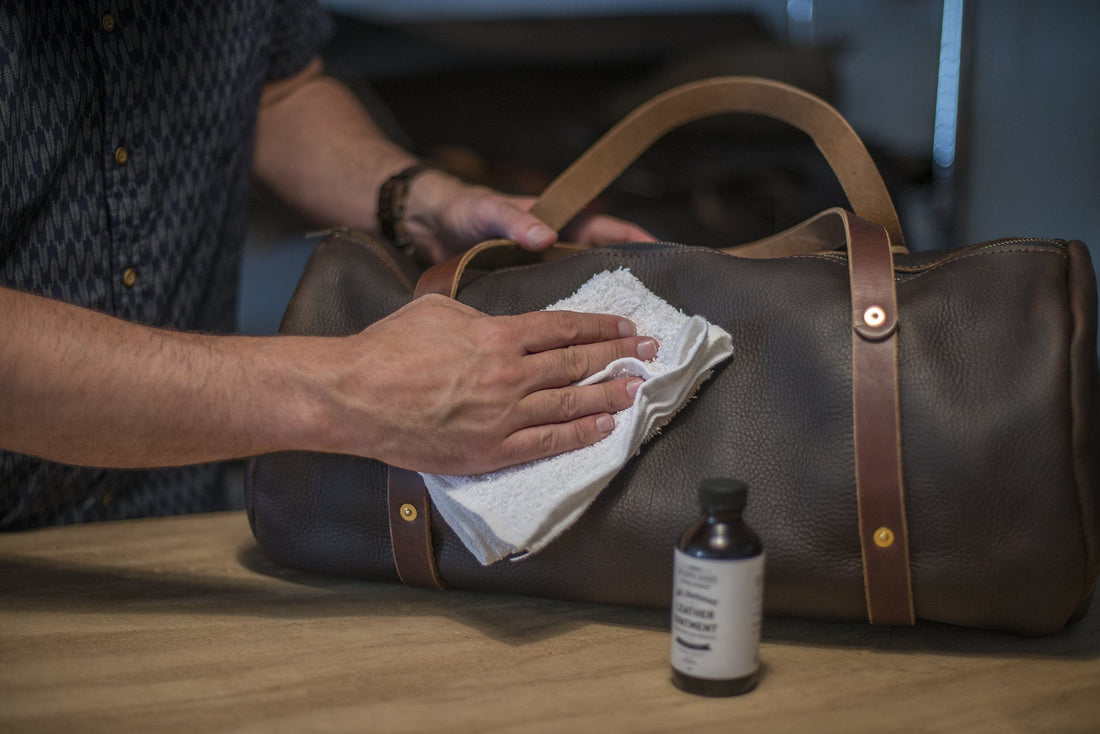
Step one is regular cleaning. Use a soft, dry cloth to wipe away dust and dirt weekly. For deeper cleaning, use a damp cloth with a tiny amount of saddle soap, working in small circles. Step two is conditioning. This replenishes the natural oils that keep leather supple. Use a product like Lexol or Bick 4 every 4-6 months, applying sparingly and evenly. Step three is protection. For items exposed to the elements, a waterproofing spray designed for leather adds a crucial protective barrier. Step four is proper storage. Store leather goods in a cool, dry place away from direct sunlight. Use breathable dust bags, never plastic, to prevent mildew. Step five is addressing stains immediately. Blot liquids, do not rub. For oil stains, sprinkle with cornstarch to absorb, then brush away after 24 hours.
The global leather goods market was valued at over $400 billion in 2022, a testament to its enduring appeal (source: Grand View Research). Protecting your investment within this vast market is both economical and sentimental.
BUILDING A TIMELESS COLLECTION OF LEATHER GOODS
Approaching leather and goods with a collector’s mindset means prioritizing versatility and longevity over fast fashion trends. Start with foundational pieces: a classic tote or briefcase, a quality belt, and a durable wallet. Look for neutral colors like brown, black, or tan that pair with everything. As your collection grows, you can add statement pieces like a colored jacket or a unique bag.
Interestingly, the demand for sustainable and traceable leather is rising significantly. A 2021 report indicated that over 60% of consumers are willing to pay more for products with verified ethical sourcing (source: McKinsey & Company). This shift encourages brands to be more transparent about their supply chains, from farm to finished product.
YOUR LEATHER GOODS CHECKLIST
To ensure you are always making the best decisions, keep this practical checklist in mind.
IDENTIFY THE LEATHER TYPE: Always ask for full-grain, top-grain, etc.
INSPECT CONSTRUCTION: Check stitching, edges, and hardware.
PERFORM THE FEEL AND SMELL TEST: Trust your senses for quality.
MATCH LEATHER TO USE: Refer to the comparison table for guidance.
INVEST IN PROPER CARE PRODUCTS: Have a cleaner and conditioner on hand.
ESTABLISH A MAINTENANCE ROUTINE: Clean and condition regularly.
STORE CORRECTLY: Use breathable bags in a climate-controlled space.
BUY FROM REPUTABLE SOURCES: Support transparent brands or artisans.
EMBRACE THE AGING PROCESS: Allow patina to develop naturally.
THINK LONG-TERM: Choose classic styles over fleeting trends.
By following this guide, you move from being a simple consumer to a knowledgeable custodian of leather and goods. Each scratch and sheen will tell the story of its use, making your collection uniquely and authentically yours.