





Modern supply chains are marvels of efficiency, but they are also incredibly fragile. A single disruption in a distant port, a geopolitical conflict, or a supplier’s financial trouble can ripple across the globe, halting production and eroding profits. This reality makes mastering supply chain risk mitigation strategies not just a logistical concern, but a core business imperative for survival and growth.
This guide moves beyond basic theory. We will explore a comprehensive, actionable framework for building a resilient supply chain. You will learn to identify hidden vulnerabilities, implement proven mitigation tactics, and create a culture of proactive risk management.
UNDERSTANDING THE LANDSCAPE: WHAT ARE YOU MITIGATING?
Before deploying any strategy, you must first understand the enemy. Supply chain risks are diverse and often interconnected. Broadly, they fall into several key categories:
Operational Risks: These are internal or day-to-day disruptions. Think equipment failures, quality control issues, labor shortages, or IT system outages.
Financial Risks: Fluctuations in currency, sudden changes in commodity prices, or a key supplier facing bankruptcy.
Geopolitical and Regulatory Risks: Trade wars, tariffs, sanctions, political instability, or new compliance laws that alter the rules of engagement.
Environmental Risks: Natural disasters like floods, hurricanes, or earthquakes. This also includes long-term climate-related risks and resource scarcity.
Cybersecurity Risks: Data breaches, ransomware attacks on your systems or a partner’s systems that can freeze operations and leak sensitive data.
A study by the Business Continuity Institute found that 44% of organizations experienced at least one supply chain disruption in 2023 that cost over $1 million. This statistic underscores that risk is not a hypothetical; it is a frequent and costly reality.
THE 7-STEP FRAMEWORK FOR SUPPLY CHAIN RISK MITIGATION
Implementing effective supply chain risk mitigation strategies requires a structured approach. Follow this seven-step framework to build resilience systematically.
STEP 1: MAP AND VISUALIZE YOUR END-TO-END SUPPLY CHAIN
You cannot protect what you cannot see. Start by creating a detailed map of your entire supply network, extending beyond Tier 1 suppliers to Tier 2 and Tier 3. Identify all nodes: suppliers, manufacturing sites, warehouses, logistics hubs, and distribution channels. This visibility is the foundational step for all subsequent actions.
STEP 2: IDENTIFY AND CATEGORIZE RISKS
With your map in hand, conduct a thorough risk assessment. For each node and link in your chain, ask: What could go wrong? Use the categories listed above as a guide. Engage cross-functional teams from procurement, logistics, finance, and IT to get a complete picture. Prioritize risks based on their potential impact and likelihood of occurrence.
STEP 3: ASSESS AND PRIORITIZE IMPACT
Not all risks are created equal. Use a risk matrix to plot identified risks. High-impact, high-probability risks demand immediate attention and robust mitigation plans. Low-impact, low-probability risks might only require monitoring. This prioritization ensures you allocate resources effectively.
STEP 4: DEVELOP AND IMPLEMENT MITIGATION STRATEGIES
This is the core action phase. For your high-priority risks, select and deploy appropriate mitigation tactics. These strategies generally fall into four types:
Avoidance: Eliminating the risk entirely, such as ceasing operations in a high-risk region.
Reduction: Taking steps to lessen the impact or likelihood, which is the focus of most operational strategies.
Transfer: Shifting the risk to another party, typically through insurance or specific contract clauses.
Acceptance: Consciously deciding to retain the risk, often because the cost of mitigation outweighs the potential loss.
STEP 5: DIVERSIFY YOUR SUPPLY BASE
Over-reliance on a single supplier or region is a critical vulnerability. A core supply chain risk mitigation strategy is strategic diversification. This does not necessarily mean replacing your primary supplier. It means developing qualified backup or alternative sources for critical materials and components. Consider a “China Plus One” or regionalization strategy to balance cost with resilience.
STEP 6: BUILD IN INVENTORY AND CAPACITY BUFFER
Just-in-time (JIT) inventory maximizes efficiency but minimizes resilience. Introducing strategic buffers of safety stock for critical items can be a cost-effective insurance policy against disruptions. Similarly, having agreements for reserved production capacity with key partners can provide crucial flexibility during surges or recovery periods.
STEP 7: FOSTER COLLABORATION AND VISIBILITY
Resilience cannot be built in a silo. Develop strong, transparent relationships with your key suppliers. Share demand forecasts, collaborate on contingency planning, and invest in technology that provides real-time visibility into shipment status, inventory levels, and potential delays. A collaborative partner is more likely to prioritize your needs during a crisis.
TACTICAL DEEP DIVE: KEY MITIGATION STRATEGIES IN ACTION
Let us explore some of the most powerful tactical supply chain risk mitigation strategies in greater detail.
Supplier Relationship Management (SRM) and Vetting: Proactive SRM is your first line of defense. Conduct rigorous financial and operational due diligence on new suppliers. For existing partners, implement a continuous performance scorecard that tracks quality, on-time delivery, and communication responsiveness. Strong relationships enable better risk-sharing and problem-solving.
Demand Forecasting and Planning Agility: Inaccurate forecasts can either leave you with dead stock or unable to meet demand. Leverage advanced analytics and demand sensing tools to improve forecast accuracy. More importantly, build an agile planning process that can quickly re-forecast and re-plan in response to disruptions, minimizing the bullwhip effect.
Technology as a Force Multiplier: Modern supply chain technology is not a luxury; it is the central nervous system for risk mitigation. Key technologies include:
Internet of Things (IoT) sensors for real-time tracking of location, temperature, and condition.
AI and machine learning for predictive analytics, identifying potential disruptions before they occur.
Cloud-based platforms that provide a single source of truth and enhance collaboration across partners.
Blockchain for creating immutable, transparent records of transactions and provenance.
COMMON PITFALLS TO AVOID
WARNING: Even with the best intentions, companies often stumble in their risk mitigation efforts. Be aware of these common traps.
Focusing Solely on Cost: Choosing the cheapest supplier or logistics option often comes with hidden risk premiums. A slightly higher cost from a more reliable partner can save millions during a disruption.
Static Risk Planning: Conducting a risk assessment once a year is not enough. The risk landscape is dynamic. Your mitigation plans must be living documents, reviewed and updated quarterly or in response to major world events.
Ignoring Tier 2 and Tier 3 Suppliers: Your Tier 1 supplier may be reliable, but if their critical sub-supplier fails, your chain still breaks. Extend your visibility and assessment efforts down the supply chain.
Over-Reliance on a Single Strategy: Diversification alone is not enough if you lack visibility. Technology alone cannot fix poor relationships. A holistic approach that combines multiple strategies is essential.
COMPARING RISK MITIGATION APPROACHES
Different strategies serve different purposes and require varying levels of investment. The table below contrasts two fundamental approaches.
| Strategy | Primary Goal | Key Actions | Best For Mitigating | Resource Intensity |
|---|---|---|---|---|
| Supplier Diversification | Reduce dependency | Identify and qualify alternate suppliers; multi-sourcing; regionalization. | Geopolitical risks, supplier bankruptcy, capacity constraints. | High (requires significant due diligence and relationship management) |
| Inventory Buffering | Absorb demand/supply shocks | Carrying strategic safety stock; implementing “just-in-case” inventory for critical items. | Demand spikes, short-term supply disruptions, transport delays. | Medium (ties up working capital and incurs holding costs) |
IMPLEMENTING A CONTINUOUS IMPROVEMENT CYCLE
Based on my experience consulting with manufacturing firms, the most resilient organizations treat risk management as a continuous cycle, not a one-time project. They establish a cross-functional risk council that meets regularly. After any incident, even a near-miss, they conduct a thorough post-mortem. They ask: What did we learn? How can we improve our process? This culture of learning turns disruptions into opportunities for strengthening the entire supply chain.
Furthermore, they invest in regular stress-testing and scenario planning. For example, they might run a simulation: “What if our primary port of entry shuts down for two weeks?” Playing out these scenarios reveals hidden gaps in plans and builds muscle memory for the real event.
YOUR SUPPLY CHAIN RESILIENCE CHECKLIST
Use this actionable checklist to assess and improve your supply chain risk posture. A complete “Yes” indicates a strong position.
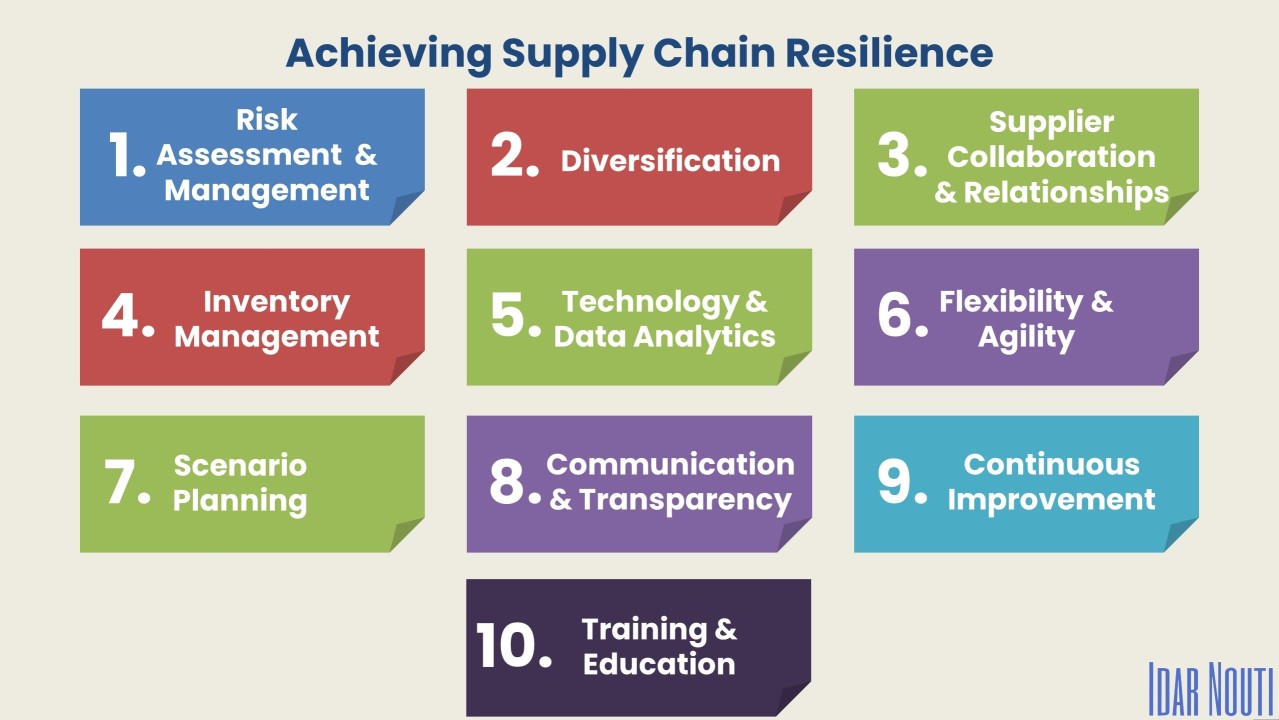
HAVE YOU mapped your supply chain beyond Tier 1 suppliers?
DO YOU conduct formal, documented risk assessments at least twice a year?
HAVE YOU identified and prioritized your top five supply chain vulnerabilities?
DO YOU have qualified alternative sources for your most critical materials?
IS THERE strategic safety stock in place for high-risk, long-lead-time items?
DO YOU have real-time visibility into in-transit shipments and inventory?
HAVE YOU reviewed and updated your business continuity and disaster recovery plans in the last six months?
DO YOU hold collaborative risk planning sessions with your top suppliers?
HAVE YOU invested in technology for data analytics and demand sensing?
IS THERE a dedicated team or committee responsible for ongoing supply chain risk management?
Building a resilient supply chain is a journey. It requires investment, leadership commitment, and a shift from a reactive to a proactive mindset. By systematically implementing these supply chain risk mitigation strategies, you transform your supply chain from a cost center into a formidable source of competitive advantage, capable of weathering any storm. Start today by mapping your chain and taking that first crucial step toward true resilience.
(来源: Business Continuity Institute’s “Supply Chain Resilience Report 2023”)